ICC
Explore past sessions from the annual Ignition® Community Conference.
Browse ICC content by year:
Filter
Sort
icc
|
2024
IA Session
Integrating Ignition with Exciting Peripherals
Ignition is based on open standards, is deployable anywhere, provides data to anyone, and can integrate with virtually any system or device. This allows you to leverage best-in-class technology with seamless integration to Ignition. Perspective and the native iOS and Android application is a perfect example of this. Ignition enables people to extend their applications to a phone or tablet by leveraging the camera, GPS, NFC, Bluetooth LE, and other mobile tools. In this session, you’ll get some exciting use cases and live demos featuring one exciting OT peripheral and one very cool guest appearance you won’t want to miss!
45 min video
Watch the video
icc
|
2024
Build-a-Thon
Build-A-Thon
Behold, another Build-a-Thon is upon us, complete with all the intrigue, feats of daring design, unexpected surprises, and singing that usually accompany such a monumental event. This year, teams from two top integration companies will battle to see who can design the best Ignition project. Don't miss all the excitement of witnessing the crowning of a new Build-a-Thon champion live at this educational, one-of-a-kind competitive SCADA event!
100 min video
Watch the video
Traditionally, we've always held the Technical Keynote or Development Panel on Day Three of the conference, but this year, we've got something big to discuss, so we've moved it up to Day One of our conference content schedule. It's no secret that we've been working on the newest version of Ignition for several years now, and now we're finally able to dive deep into what's coming in Ignition 8.3 and how its powerful new features can lead users to their next big breakthrough idea!
Transcript:
00:02
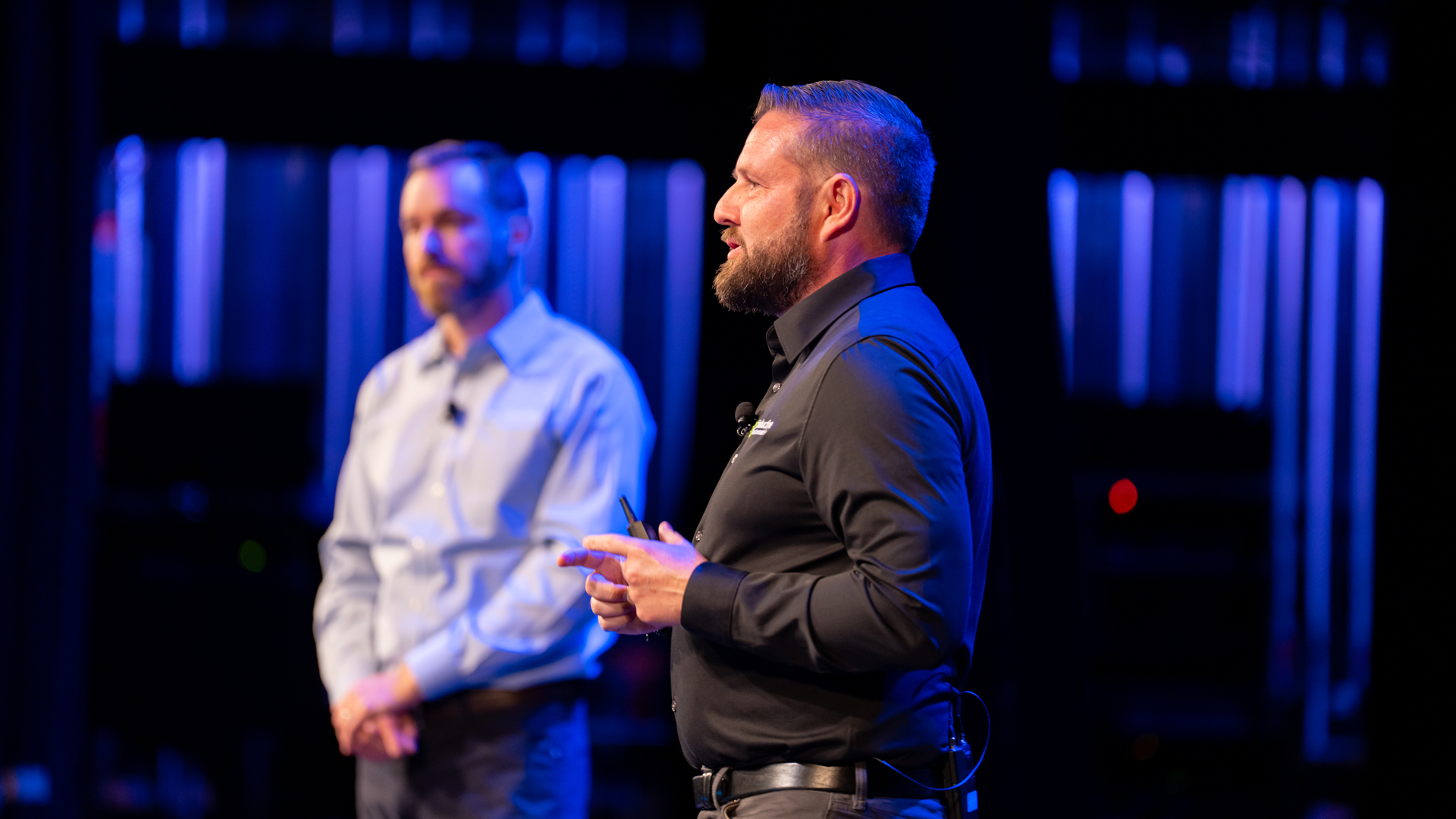
Colby Clegg: Thank you. Thank you, thank you, thank you. Thank you. Welcome to the Ignition Community Conference, 2024 edition, Breakthrough. If you can't tell from the pictures, I'm Colby; that's Carl. I think we've been doing this so long, we're starting to look alike. I don't know. But we are very thrilled to welcome you here to Folsom for this week of discovery, learning, and collaboration.
00:37
Carl Gould: Yeah, this event is really the highlight of our year. It's our chance to get together with all of you and, of course, discuss what we've been up to this year. But at the same time, it's just as important for us to hear from you, hear what are your challenges, what are your successes throughout the year, and what are you most interested in right now? Because the collaborative nature of this community is really what makes ICC so special. So whether you're a returning ICC veteran or you're here for the first time, we're really glad you made it out, and we're looking forward to an incredible week.
01:11
Colby: Yes, and what a week it'll be. The pace of innovation in our industry has really been accelerating. It's an incredible place right now. Fundamental technological building blocks have been put in place over the last few years, are being used with new thought processes, new methodologies to build incredible, global, unified systems that are defining the future of automation right now.
01:25
Carl: And, of course, we see Ignition as a foundational part of this future, driving and supporting all of that innovation. And to that end, we're thrilled to be here this afternoon to introduce to you the latest major version of Ignition, version 8.3.
01:45
Colby: Indeed. Thank you. Yeah, certainly, in some regards, this release has been a long time coming. But from a different perspective, the new release is a culmination of a journey that we've been on for a few years. And Carl and I can say with confidence that we really feel that it is the right product for where the industry is at right now. So we can't wait to share it with you. Also, Ignition 8.3 is our most substantial and ambitious release we've ever done. I know we say that each time, but when you consider that the last time we did a major release, consider that our development team was about one-third of what it is now. So this is a substantial release, and we're gonna share a lot of it with you this afternoon by going over three key parts.
02:37
Carl: Yeah, and those three parts are applications, the historian, and our approach to infrastructure. And then, so we're gonna be out here giving a high-level overview of what's new in each of these three areas. And after that, Travis and Kevin will come out, and they're going to go over some examples of architectural use cases, and then after this keynote, right here on this stage, we're gonna be back for some deeper dive sessions going into what these... All these new features that we're about to go over are all about and how to use them. And then finally, we'll be back for a closing keynote on Thursday, where we'll touch briefly on what the future looks like beyond Ignition 8.3.
03:10
Colby: So with the agenda out of the way, we are ready to get started, but we wanted to take one moment just to talk about numbers, because I think that everyone here who's qualified to use our software knows that three does not come right after one. So very quickly, we wanted to talk about why we're calling it this with two key points.
03:27
Carl: Yeah, so the first is just that we really used the time frame that would have gone into developing what would have been a theoretical 8.2 just to make Ignition 8.1 all that much better. And the second one is that we use even numbers to represent releases that don't come with long-term support, and we don't think anybody wants a version of Ignition without long-term support, so we wanted to use another odd number. And those are both fine and accurate explanations, but it's also not a pattern that we wanna keep going with. So after 8.3, we're gonna be getting back to a slightly faster release cycle, roughly two to three years. Four was too long. And the next version will fix this numbering scheme we've gotten into.
04:07
Colby: Ignition XP?
04:09
Carl: Time will tell.
04:12
Carl: Well, let's call it Ignition XP.
04:12
Colby: Well, I got a few years to convince him on that one. But I'll tell you for now, a side effect of calling it 8.3 is that the three invokes perhaps the third part of a trilogy, which is really very much how we see this release. 8.0, 8.1, and 8.3 represent a philosophical progression towards delivering what was our ultimate vision starting a few years ago: to build a completely modern platform to support the next generation of industrial applications.
04:41
Carl: Evolving a platform like Ignition in this way is not easy. And historically, a lot of vendors in this space have really struggled with it over the long term. Continuing to innovate and stay modern while at the same time providing stability and continuity that this industry demands is pretty challenging. But we're proud of our strong track record in this area. We have a 20-year track record of doing exactly that. And 8.3 really continues in that tradition, promising a smooth upgrade experience as we have totally modernized the platform. In fact, when we think about our development process and how we approach what to include in the product and how to change it, we realize that there's really four key forces that we're always working to keep in balance. And those are innovation, continuity, stability, and security.
05:39
Colby: Taking the first two, innovation and security, both of these require constant evolution and change, and those fight against the desire for continuity and stability, which are paramount for plant floor operations. Really, there's one goal on the plant floor, and that is to keep running and keep running well. Well, stability is crucial here, as well as continuity, so that you don't have to continuously reinvent the wheel as new solutions come along. Typically in our industry, though, that has been achieved through the years by sacrificing innovation and security. Innovation is about bringing in new technologies to expand what you're doing, and security really often depends on your ability to evolve infrastructure, adapt to changing environments, and roll out security updates effectively. Balancing these four forces is a complex struggle, but as Carl said, we're very proud of the track record we've built.
06:26
Carl: Yeah, let's take a look at each one individually. So let's start with security. This year, we passed our audit for ISA 62443 security maturity level 3, which attests to the fact that our software development lifecycle considers security at every point along the chain. We also routinely participate in security conference competitions where we put Ignition up in front of security researchers who are highly motivated by some pretty sizable cash prizes to find new vulnerabilities in Ignition. If and when a new vulnerability is found, we're known throughout the industry for having a rapid response time and a transparent disclosure policy so that you can all be apprised of any new vulnerabilities that are found, including information so that you can evaluate whether or not your systems may be at risk, and if so, how to patch them.
07:17
Colby: In regards to stability, we've been working for the last few years to get to the place where today we're proud to say we have a one-to-one engineer ratio between software engineers and QA engineers. So that means that QA is an equal voice in the entire development lifecycle from inception to release. We also work hand-in-hand with our support division, which is in-house, of course, and the front line of our user experience. So support, test, and dev are all able to work effectively together to really be able to deliver changes in a timely manner.
07:52
Carl: Next up is continuity. Around here, backwards compatibility is always job number one, and we have the 20-year track record to prove it. There are systems in production today running the latest version of Ignition that have been continuously upgraded all the way from the old Factory PMI and Factory SQL versions 1, which was the software we had way before we even came out with Ignition. And we're able to do this because we take special care to manage our technical debt, which means that we can ensure that the platform itself is able to stay modern and doesn't get sort of bogged down by its own baggage. This is actually a huge part of the work that went into the development of Ignition 8.3 that should be mostly invisible. So it's not very flashy, but it really is an important point for creating the conditions necessary for this kind of long-term continuity.
08:44
Colby: Absolutely. And then finally, innovation. It's always been our philosophy to not create solutions in search of a problem. We always try to talk to customers and then create solutions that are practical and pragmatic. We also put special attention on creating features and solutions that have the broadest applicability possible and avoid going too much into vertical solutions. Finally, it's important to note that both the product itself and Inductive Automation as a company are the result of organic growth without a expansion through acquisition mentality. And so that helps the product to be much more cohesive and natively integrated.
09:21
Carl: Yeah, for sure. So we wanted to start our presentation this afternoon for 8.3 by highlighting these four topics because, by focusing on achieving balance with these four forces, our ultimate goal is that through Ignition, we can all help you balance these same four forces that are at play in all of your systems as well. But without further ado, let's get into what's actually new in Ignition 8.3 that should help you do just that. And let's start with the category of applications.
09:48
Colby: Yes, and let's start with perhaps the most obvious visual change as you start up a new Ignition gateway, and that is the complete redesign and recreation of our gateway web interface. So our design team reimagined our gateway configured interface from the ground up. We combined years of user feedback and experience with our own increased sophistication in UI and UX design to create an interface that is intuitive, easier to use, more scalable, and packed with clever features.
10:17
Carl: The navigation section of the gateway has been completely reimagined, resulting in a far more logical and structured layout. So items are easier to find, and configuration and diagnostic data have been combined together so that you don't have to bounce around between different sections any longer to both understand what's going on with your system and then also make configuration changes. This interface is also designed to work far more gracefully at scale, providing a consistently fast UI no matter how many items you've configured in your gateways and allowing for multi-selection, bulk edits, and an integrated search capability throughout the entire UI. So there's a lot of advanced functionality to discuss here, but we'll save some of that for the deep dive as we move on to the next UI-focused feature.
11:05
Colby: Yes, indeed. We're happy to announce that Perspective finally gets its own integrated drawing tools in Ignition 8.3.
11:17
Colby: So we've spent a lot of time, a lot of time, creating a completely bespoke drawing interface and making it really good, built entirely to work with Perspective.
11:28
Carl: Yeah, using the new built-in drawing tools, you can start with the existing symbols, you can import symbols from other systems, or you can just create symbols from scratch, all without leaving the designer at all. And the editor has all the kinds of drawing conveniences you would expect in a vector editing package, like snapping and guides and fill and stroke and path editing, layering, et cetera.
11:53
Colby: Best of all, since it was built from the ground up for Perspective, it has native binding integration, which means that you can connect the visual representations of your drawings to your real-time state throughout your system. We know this was a hotly anticipated feature, but it's not all that we have for Perspective.
12:09
Carl: No, not at all. Let's talk about forms. So, input and edit forms, a pretty commonplace part of any application. I'm sure building forms is something many of you who have application experience, application building experience, have spent a lot of time doing. It's kind of a mundane feature. Doesn't usually get a lot of attention, but we've, over the years, observed some patterns in how forms are built over and over again, and we realized that this was an area that was actually quite ripe for some improvement.
12:41
Colby: Yes. First of all, wiring together a form with labels, inputs, dropdowns, and so on is tedious and repetitive. Then, when you think about what should be done in regards to validation and intuitive user feedback, it gets even more laborious. So, of course, we realized we could save you a lot of time by creating a component that helps you with this. So now all you need to do is configure your form's sections, fields, data types, and validations in a declarative manner, and the component will take care of the hard work of making the UI for you, building the form's internal, the form's layout, internal validation, and client-side validation and feedback rules.
13:16
Carl: Yeah, all that automatic layout and having it be automatically mobile responsive, I'm really excited about this. But perhaps the most important part of the new form component is actually in how it deals with packaging up a data submission and sending it back to the gateway, which brings us to the third feature we have today for Perspective.
13:34
Colby: Yes, over the last five years, you've shown how Perspective can be used to create all sorts of applications. But there is one category of application that you haven't been able to create, and those are applications that have to be able to work without connectivity to the gateway.
13:52
Carl: In 8.3, this is no longer a limitation. So now you can design a Perspective application that is designed and built to work entirely offline. The intended use case here...
14:07
Carl: All right. We're glad you're excited also.
14:09
Colby: Somebody knows the use case.
14:11
Carl: Somebody does. The use case is intended for applications where an operator might need to drive somewhere remote, they have no connectivity whatsoever, and they need to gather some data, maybe fill out a maintenance form or read a meter. And in these kinds of scenarios, you'll be able to mark your Perspective application for offline use, arrive in your off-site location, launch it, fill out your form, and submit the data.
14:41
Colby: Yes. And once submitted, the form's data will be queued up, and when the device is later returned into a field of connectivity, that data will be synchronized behind the scenes automatically to the Ignition gateway that the project is connected to. So as always, when we add an additional feature like this, some fundamental building block that opens up a new category of application that can be built, we get very excited to see what you build with it.
15:06
Carl: Absolutely. Because we all know that Ignition is really all about data, right? Acquiring it, contextualizing it, storing it, building useful applications around it. One of Ignition's biggest strengths is all of the different ways data can be used and manipulated. And Ignition is called many things, depending on the context. A data hub, or an edge data collector, or a data ops platform if you wanna be trendy. It can be all those things because of all the different ways data can be used.
15:46
Colby: These are all data concepts that exist today in the Ignition ecosystem. They're technologies that all of you use each day to wire together data in and out and together in different ways. But as we continue to add more connectors and really look at the ways that data can be made more useful, we realized that we were missing a central unifying concept. And that's what we're introducing today with Event Streams.
16:05
Carl: An event stream is essentially a pipeline that maps event data from a source to a handler. Pretty simple idea. And like so many things in Ignition, that simplicity also relies on incredible power. Because inside of the pipeline, you're able to do all sorts of things with the data. You can coerce it and transform it and filter it, batch it up for efficiency's sake.
16:28
Colby: Yes, and both sources and handlers are extensible, which means that all parts of Ignition and modules can contribute them. So when we launch, we'll have sources and handlers for some of the most important key systems in Ignition.
16:45
Colby: That means that event streams are a bus for data in and out of Ignition, but it's also a bus for data inside of Ignition, and you can now connect together many subsystems in a very easy, powerful, and intuitive manner. That power will only continue to grow as we add new sources and handlers over time.
17:02
Carl: Yeah, the real power of this design is in the decoupled nature of these sources and handlers. So let's look at some examples of how this might be used. You might install the new Kafka Module and subscribe to a Kafka topic. Okay, so now events from Kafka are arriving in your gateway. You might also have the Sequential Function Chart Module installed so that when a new event arrives, it instantiates an instance of an SFC to handle that event using some complex logic. Now, the Kafka Module doesn't know anything about the SFC Module. The SFC Module doesn't even know Kafka exists, and yet here they are working seamlessly together through Event Streams.
17:42
Colby: There are really so many great examples we could give. For example, we came out with the MongoDB Connector a little while ago. Well, MongoDB has a cool feature called Change Streams where you can basically register a query and be notified as data changes. So imagine having a Mongo Change Stream observer coming into Event Streams where you're running a script or performing a calculation, or perhaps writing that data to tags.
18:06
Carl: You could pipe Ignition alarm events to an Amazon simple notification service.
18:12
Colby: You could have a whole chain with UDTs publishing changes to Kafka, which are then consumed by a set of front-end servers, for example.
18:21
Carl: Yeah, you can see we're having fun dreaming up all kinds of fun possibilities because the combinatorics here are really fun to play with. There's just so many possibilities.
18:31
Colby: Ignition has so much power in it now, and we're absolutely thrilled about how Event Streams gives us a new way to magnify that power in such a simple and intuitive manner. This new feature basically leverages all of the incredible features of Ignition to create a robust and capable stream processing engine. On the subject of data, you know what else people like to do with it in Ignition. They like to store it and a lot of it.
18:54
Colby: And so let's talk about our historian system. Our approach to history has always been as controversial as it has been successful. Unlock modern open technology to serve your history needs. Yes, we use SQL databases as our historian. Many people love to argue that SQL databases are not industrial time-series historians, but we found those tend to be the people selling industrial time-series historians.
19:22
Carl: What, it's true. What SQL databases do is enable you to use standard, open, well-understood, IT-supported technologies to store any kind of data. They're very flexible. Now, I'm sure there's more than a few enterprise DBAs spread amongst you that might be a little bit upset with us for the amount of data that ends up showing up in their databases that then they are responsible for maintaining, but you can't deny the fundamental benefits of this approach. Open data, industry standard tools, and technologies that your companies already have a lot of standards and expertise built around.
20:00
Colby: Yes, that said, since the first release of Ignition in 2010, we've been asked over and over again this simple question: When are you gonna build a real historian? Well, today, we're gonna answer that. We're not. Now hold on. I see some of you are trying to unbolt the chairs and throw them at me. Don't worry, I'm mostly trying to rile you up, and I actually do have something new for you shortly. But the point is, the answer is more complex than that.
20:27
Carl: Yeah, you know, in the last few years, there's been a lot of really exciting development in the open technology area when it comes to time series data. And a lot of this innovation has come from the consumer IT space, where concepts like IoT and the way the modern internet tracks every click and every impression hundreds of millions of users are making results in massive streams of time-series data. And so it's led to a proliferation of a lot of really interesting, robust, and open technologies becoming available in that space.
21:01
Colby: Yes, today there are so many incredible technologies available to store, analyze, and manage time-series data. When we look at that technology ecosystem and think the way that we have always thought, it strikes us that we don't wanna create another, some sort of new proprietary historian system. No, instead, we wanna make it possible to leverage all of that technology through Ignition.
21:26
Carl: But there's not really any kind of standard for all this different technology, like there is for relational data. So in order to help us leverage all these interesting options, we needed to first create a framework for building historian implementations inside Ignition around these technologies, which is what we've done for 8.3. In 8.3, we've totally rethought the approach to time-series history storage. And we've created a new public API that will allow us or any third-party module author to quickly implement new historian implementations and adaptations around these sorts of storage and querying technologies.
22:06
Carl: It has support for bulk storage as well as streaming data collection and the ability to store rich metadata models along with the history, which will help with the contextualization needed to support more advanced querying. It also supports key historian features like data annotations and native in-engine data aggregation and calculations, and many things like that.
22:30
Colby: Yes, so this means that Ignition isn't just a historian; it's a platform for building historians. And that may be a first in this industry. But I told you, we do have something new, and it would be the first implementation of this interface, and it's called the Ignition Power Historian.
22:47
Carl: So the Power Historian, it's an embedded in-process time-series historian that can store your data simply efficiently with minimal configuration. And we wanna be clear about positioning this correctly. So this isn't supposed to be a drop-in replacement for some grand enterprise historian solution. But it'll make a really big difference in what is becoming increasingly a very common architectural use case.
23:12
Colby: Yes, let's look at one very common architecture today. So virtually everyone is storing history into a SQL database. And the system uses store and forward to get the data there. Well, while the data is in store and forward, it's unavailable to the system. So for that reason, combined with local query performance, it's very common now for users to also add a local historian there in that gateway. And then use the Tag History Splitter to send data to both places. That tool, the Tag History Splitter, manages storing to both areas as well as querying based on timeframe.
23:47
Carl: So the new Power Historian really simplifies this architectural picture significantly. It can serve as a high-performance local historian, and it doesn't need the store and forward system in between the source of data and the Power Historian. It can then be used as a source to later synchronize to a remote historian for longer-term storage. So you can see how much efficiency and simplicity we get by adding this piece into the architecture. And real quickly, talking about performance, what do we mean? What are we expecting? So we've got some preliminary benchmarks out, and we have compared the Power Historian to both our local historian option we have as well as to a popular database system. And I just wanna pick out one key benchmark 'cause I think it's emblematic of the way this fits into the architecture, and that's really about the ingest rate capable with this time series system.
24:41
Carl: So this is a chart showing how many millions of data points per second can be ingested into the new Power Historian. And as you can see, it really blows SQLite and MySQL out of the water when it comes to ingest rates, which makes sense when you think about how we're trying to put it into the architecture and not require store and forward anymore because it's capable of keeping up with the data changes, and it's always local, so it doesn't have any network connectivity fragility in between Ignition and the Power Historian.
25:16
Colby: We'll have more benchmarks coming soon, but to summarize here these key high-level points, what we're talking about is a zero-config, self-maintaining time-series historian built into Ignition that is vastly more powerful than what's already available today for those solutions, that can act as a data source for enterprise data roll-up, thus simplifying architectures, that's part of a unified historian platform that supports richer data modeling and enhanced historian features, and by the way, is still open and non-proprietary in its data storage, and of course, is platform-independent just as Ignition is. So with all of that said, I'm sure you're wondering, Colby, that sounds great, but how much does it cost? To which I respond, nothing. We're including it in the Tech Historian Module. That means that everyone who has that module and has that upgrade protection will get this on day one with Ignition 8.3.
26:21
Carl: So again, this historian really shines when you view it from the lens of how it fits into bigger distributed architectures. So let's take a quick look at what the layers of those architectures look like.
26:35
Colby: This is a message we like to reiterate as we talk about these subjects. We really see edge, plant, and cloud, or perhaps you could describe them as edge, site, and enterprise, as a continuum where multiple levels work together in concert. Each of these layers has its own needs and requirements, but together, they form a homogeneous ecosystem. This is what we've been saying for years now and what we've been building, and we're gonna keep building towards this vision because we believe in it now as much as we ever have.
27:06
Carl: Yeah, and that philosophy can be applied to historical data as well. Each of these layers has its own requirements and its own opportunities for utilizing historical data. At the lower levels, you typically want high-resolution data stored for a shorter time frame in a system that is mostly autonomous and self-maintaining. And then, as you go up the stack, you enter into worlds where you might be aggregating and combining data for an entire region or even an entire company. And that demands a different approach. It demands more of an enterprise-grade engineered solution.
27:40
Colby: And this is a place where maximum flexibility and technological choice is vital. It's simply our philosophy that walled gardens are not the answer. Interoperable technology is. And that's what we're offering here with Ignition 8.3, a continuation of that philosophy. We've created an incredible site-level historian that provides immediate benefit. We've also created a framework for leveraging the world's best time-series technology on an enterprise scale.
28:09
Carl: Yeah, going forward, there's really a lot of incredible potential for us to continue building on this foundation and spanning from edge to cloud with this solution. But what we're offering in 8.3 is such a huge step forward for us, and we're really excited to continue to evolve it over the next few years. And now, let's move on to the final subject before we go into those architectural use cases, which is infrastructure.
28:34
Colby: When we talk about infrastructure, we're talking about how and where you run Ignition. But more importantly, we're also talking about the tools available to you to manage those instances and all of the different pieces that come along with it, the resources, the configuration, and so on. When you're building an HMI or a dashboard, you probably don't think a whole lot about infrastructure. But when you're using Ignition to do everything, everywhere, as we hope you all eventually will, infrastructure becomes fundamental.
29:06
Carl: Yeah, the subject of OT/IT convergence has been a topic that we've been talking about in this industry for a long time now, and we like to feel like we played an important role in helping to ignite that discussion because it's really a core part of our origin, why we even exist. Even before that term was in popular use, one of the first modules we came out with for Ignition was the SQL Bridge Module. What was it bridging? It was bridging OT technology in the form of OPC and IT technology in the form of SQL databases.
29:40
Colby: But at that time, it was really about unlocking value and functionality by leveraging the capabilities of IT software in the OT space. But true OT/IT convergence is far more than that. At the end of the day, it's about bringing together these two worlds that have vastly different engineering requirements and bringing them together to try to find a way to compromise those requirements and find an optimal way forward.
30:08
Carl: So what do we mean by that? On the OT side, as we've been saying, stability and continuity are paramount. Nothing should stop production, and the investment that you put into your OT projects has gotta last a lot longer than the average life cycle of an IT project does. But over on the IT side, you need to be able to manage these applications and systems as well-behaved citizens in your technology ecosystem. They can't be rogue agents or isolated islands that are not touchable. And of course, security is paramount because IT's gotta keep these systems patched.
30:46
Colby: Yes, today we're far beyond the idea that security can be achieved through isolation. And I haven't met anyone recently who doesn't believe that IT working closely together with OT is vital to create a better security stance in our industry. That means agility in responding to threats, frequent updates, and the ability to recover quickly should anything happen. Concepts that are typically far more comfortable for IT than for OT.
31:11
Carl: Yeah, our role is really a lot bigger than just letting you use some neat technology to send a ton of data up to HQ. If you want to achieve true convergence between operational and information technology as you're on a Digital Transformation journey, what you need is a platform that perfectly bridges the unique requirements of both sides. A platform for building OT applications on IT infrastructure. And that's what Ignition is. Hashtag, what the heck is Ignition? I finally figured it out, Colby.
31:45
Colby: I think that competition ended six months ago.
31:48
Carl: Too late.
31:49
Colby: Okay, but what does this mean exactly? What traits make Ignition so IT compatible? And more importantly, what does that mean today for Ignition 8.3? Well, first of all, of course, Ignition is platform-independent. This was a big deal when it was first released because at that time, not only was the industry completely dominated by Windows, far worse, it had become very, very sensitive to OS requirements. In fact, I just heard a story a few weeks ago about a plant that's still running a Windows Server 2003 machine in the corner because they can't upgrade it right.
32:22
Carl: I feel like we all have stories like this in this industry. They're far too common. But it's really not about Windows or Linux anymore. It's really just about being platform agnostic in the first place so that you can just conform to whatever technologies and platforms your IT department can happily keep patched and up to date, which again is vital for security. But Ignition's always been platform-independent. That's not new. So what's new today? Well, today, the discussion about deployment infrastructure has moved far beyond operating systems at all.
32:55
Colby: Yes, today's enterprises are managing resources on an incredible scale. And the technologies to help them manage those resources have really advanced in the last few years. Today, concepts like containerization, orchestration, infrastructure-as-code, and source control are no longer cutting edge. They're just standard tools of a modern IT infrastructure.
33:16
Carl: And there's plenty of ways to leverage these kinds of tools with all kinds of software, but it really works best when that software has native support for these techniques. And we've long been proud of how well Ignition works with these types of technologies, but that support hasn't really been complete in our minds until now.
33:35
Colby: Yes, with Ignition 8.3, we're completing the vision that we had years ago of building the world's most advanced and most IT-friendly SCADA system. So let's start at the lowest level and work our way up to see exactly what that means.
33:48
Carl: Yes, 8.3 really does complete the themes we started and set out within 8.0. So now, all of your configuration is stored in simple text-based configuration files, which means that everything in Ignition is compatible with source control systems.
34:11
Colby: Yes, in 8.3, we've eliminated the internal database, which means that all configurations, settings, project resources, even tags, are in simple and clean JSON, which means that they can be versioned, tracked, and managed with source control tools. Now, when we talk about source control tools, of course, those are very useful for engineering and the development lifecycle, but they also really help with standardization and resource reuse, because that means that all of these resources can be stored and managed and deployed using that tooling system.
34:42
Carl: Remember that shiny new web UI we looked at 20 minutes ago? Well, that web UI is completely powered by a new and modern RESTful web API. That means that everything you can do in that web API, all of that configuration management and diagnostic work, you could now do through an external agent. Furthermore, this API is totally self-documenting, and the documentation is embedded right in the product.
35:07
Colby: This means that Ignition instances can be programmatically configured and managed using standard IT technologies. We almost feel a little bad that we made the UI look so good because the most advanced companies may actually never see that configuration UI.
35:21
Carl: Sad but true. Moving on to what is often one of the trickiest, fiddliest pieces of infrastructure design, which is managing the build, test, and deployment cycle. So one of Ignition's most celebrated attributes is how quickly you can get in there and make changes. The designer's included, you can launch it, change things, hit that save button, and deploy a ton of changes right to production. But pretty quickly, as your project stabilizes and starts being critical in production, and as the teams who are collaborating in a single gateway grow and need to negotiate for resources, you wanna start developing a bit more governance around that deploy, test, develop cycle.
36:10
Colby: In an ideal picture, you would have developers making changes. Those changes would get sent over to a testing system where they'd be validated. Only after that would those validated changes be rolled out to a production gateway. The issue here is that your gateways depend on many, many external resources. And many of those resources may need to be different for each of these stages.
36:32
Carl: Yeah, so in dev, maybe you're using simulators, right? You don't wanna connect to the production assets from development, might be dangerous. Maybe in your staging environment, you have a replica database, not the actual database. There's always little differences between the environments, and that makes the deployment phase pretty challenging, reconciling those differences. And that's always been a challenge in Ignition, something that many of you have come up with a bunch of ingenious techniques to manage in different ways.
37:01
Colby: Yes, well, in Ignition 8.3, Deployment Modes are now a first-class feature. With Deployment Modes, the gateway is aware of which environment it's running in, called the deployment mode. So for example, dev, staging, or production. It's able to automatically change its configuration so that it can load the correct settings based on the defined mode for that gateway.
37:24
Carl: So the way this works is actually pretty simple. So as you configure different resources in your gateway, like database connections or devices, you can define different settings for different modes, and then the gateway will automatically load the correct settings based on which mode it's running in. So for example, if you have a database connection, and you wanna use one IP address in production and a different IP address in staging, you can do that. Those are just different settings for the same resource, active automatically in different modes. The gateway handles this all completely automatically, and to the rest of the system, it's one logical database connection that other systems depend on. So it's really a pretty simple idea, but again, once applied to the entire configuration system, it offers tremendous flexibility in your ability to build a sophisticated environmental deployment process.
38:17
Colby: I think I saw on the schedule that there was a table talk about this subject earlier. So if you weren't talking about this new 8.3 feature, well, this conversation will get easier now. So anyhow, we've just quickly covered a lot of very powerful new tools. Each one of these solves existing pain points and unlocks new potential. But to explore that concept a little more, the potential behind them, and then perhaps introduce even more, a few more new features, we'd like to welcome out here two people who know Ignition use cases probably better than anyone else in the world. No offense. That's okay. With that, please help me welcome to the stage Travis Cox and Kevin McCluskey.
39:02
Travis Cox: Hey everybody, I'm Travis Cox.
39:02
Kevin McCluskey: And hello everyone, I'm Kevin McCluskey.
39:04
Travis: You know, Kevin and I have been working together for years and I think at this point, we know each other well enough to finish each other's...
39:11
Kevin: Lunches?
39:11
Travis: Kevin, I said sentences, come on, man.
39:14
Kevin: Sorry.
39:17
Travis: Well, even though we work together a lot, we both play very different roles. In my role as Chief Technology Evangelist, I focus on spreading the word of success people are having with Ignition.
39:28
Kevin: And in my role as Chief Technology Architect, I get to work with Ignition users and our teams here at IA to ensure that our technology continues to meet the architectural needs of our customers.
39:38
Travis: So in other words, I help people dream it and to see the art of the possible.
39:43
Kevin: And I help them take the ideas that they have and do it in the best way possible for their businesses. And one of the reasons that we both wanted to talk to you about 8.3 is that we're both really excited about the possibilities that 8.3 open up for you, for your architectures today, and going into the future. We know that each of you is at a different step inside your Digital Transformation journey. And no matter where you are in the process, this release has something for you.
40:10
Travis: Absolutely, that's right. Ignition 8.3 is advanced enough for where you are right now and for where you wanna go into the future. Whether you're an Ignition newbie or you have many years of experience working with Ignition, 8.3 is gonna help bring the level and the power of your systems up to a whole new height.
40:29
Kevin: From the beginning, we've always wanted to leverage the latest and the greatest technologies. We're technologists, we absolutely love this, and you know, the whole company is, right? And we've wanted to expand Ignition's tool set so that you can up your game. 8.3 is a great example of that. Take advantage of what makes sense for you.
40:51
Travis: Yeah, Ignition always has been around answering questions like, can Ignition do this? Or can it connect to that? And these types of questions have evolved over the years. Now people are asking more questions around IT technologies than ever before. And the idea is to be able to answer the questions that are important to you. And the questions that people need answers to depends, though, on the level of sophistication they have with their systems. Now, when I say sophistication, I'm not talking about complexity. It's more about your Digital Transformation journey, and what part of that journey you're at right now. We've broken down Ignition 8.3, and this new release, into four different categories. And that is projects, data processing, system management, and IT. And today what we wanna do is talk to you about how the features of Ignition 8.3 help accomplishing your goals in each of these categories much easier.
41:41
Kevin: The first level is that of your typical SCADA application. If you've created a project that uses Perspective, Tag Historian, SQL Bridge, and you're doing very sophisticated things inside a single Ignition gateway or redundant pair, what you see here might represent you. In this example, it's advanced project design doing a lot of really cool things with this relatively simple architecture and without wider, company-wide data flows. If you're doing an IIOT system or using Ignition communication layers like MQTT or more Ignition gateways in a scale-out architecture or multi-site architecture, your complexity might look a little bit more like this. And if you're doing a full enterprise system with hundreds of locations, multiple connections, advanced deployments supported by orchestration and supported by IT departments, your sophistication level might look a little bit more something like this, where it's high across every category.
42:37
Kevin: Everyone's at a different stage inside their sophistication level and inside their journey overall. So to help understand how 8.3 can make things easier, no matter where you are on this journey, we're going to show you which of the features that Carl and Colby just talked about are going to be the most useful at each of these levels of sophistication, starting with projects.
43:01
Travis: Right, so the first area is project sophistication. And these are tools that help you build better projects, especially around SCADA. So let's say you're a brand new user to Ignition. Building a complete SCADA system is easier than ever with the new Power Historian. You can simply deploy a single Ignition server and everything's up and running. You can connect to all your devices, you can log all that data to the Power Historian, you can build up your applications and launch clients very quickly. There is no need to install any separate software.
43:35
Kevin: Yeah, so a lot of folks are used to having Ignition with a SQL Database right alongside it, even for simple applications. You can still do that, of course, and we do encourage it for more complex systems. But if you're just dipping your toes in the water of Ignition, so to speak, and you wanna spin something up really quickly, having a Historian built in along with charts and graphs and the other visualization tools all inside Ignition, that new Power Historian makes it really easy for new users to roll that type of thing out.
44:07
Travis: Yeah, and now let's say that you're an existing user and you already have a system up and running. 8.3 adds the ability to connect to more devices with the addition of the Siemens S7+ Driver. Siemens PLCs are becoming way more popular and we're seeing them used for a lot of new projects that are out there. We wanna make sure that Ignition has the relevant drivers for you to do your job.
44:30
Kevin: That's right. With a lot of folks who are using the newer Siemens processors, this is a really big deal because it allows you, if you're connecting to those processors, basically, you understood and been using symbolic addressing and you've been using some of the optimized block addressing and probably, I don't know, 20, 30% of folks inside here have struggled with that in the past, right? With the new driver, you don't have to worry about using third-party drivers or manually configuring tags from a spreadsheet or connecting to and reprogramming and changing some of those options inside the existing Siemens PLCs. This new driver just connects immediately, allows browsing, and really speeds up the time to deploying Siemens-based projects.
45:17
Kevin: And another thing that's really easy to connect to in Ignition 8.3 is Twilio Voice and WhatsApp. With native integrations to these two services, you can send out notifications to the people the way that they want them.
45:30
Kevin: Ignition's existing notification system can already send things out to SMS, email, voice over SIP or voice over hardware, get one of those boxes and go through that. We've got the Grandstream and a couple others that we recommend there. These new notification options expand out on that more to give you more services, which really gives folks a lot of great additional options here. IT loves these for a couple of reasons. They're simple, and they also reduce that need for physical hardware. It reduces or eliminates that footprint on-premise.
46:05
Travis: I'm really excited about these features, but I gotta tell you, I'm really excited that we can, for the first time, actually draw a circle in Perspective.
46:16
Kevin: Travis. Ah. What is it that they say? Sometimes the simplest things are the ones that matter the most. Seriously, though. Perspective Drawing Tools, not Perspective Circles. We know people have been asking for this for a long time. We're really happy that we're providing this first-class, state-of-the-art drawing tools that you saw earlier directly inside Perspective.
46:42
Travis: For sure, and this feature's really gonna get us to get people the confidence and the speed to build full HMIs with Perspective to really take advantage of the most amazing, the most advanced visualization system on the market today. So, like Carl said earlier, Perspective, there's a lot of new tools that are coming in there. And in addition to drawing tools, Perspective's also taking forms to that next level. There are a lot of customers out there that need to collect data in remote locations that have very limited or no connectivity at all. And this makes it really challenging to collect inventory or sample data and get that information back into Ignition. And we've all had to do this before by building custom-built solutions. That is very difficult to maintain over time. This new form component and offline capability, it gives you the ability to do that so easily. It's gonna be a game-changer for data collection possibilities inside of Ignition.
47:33
Kevin: I've built a lot of forms in Ignition over the years, as I know a lot of you have as well. And I can tell you that there's a substantial amount of time that goes into building good forms. 8.3 is going to make that so much faster and easier for folks to build forms. And when you combine that with the forms offline mode, it's going to be a really nice experience for building projects, especially things that are replacing clipboard entry or some of the traditional types of forms that people would be walking around and filling out. You can do that inside Ignition in a way that is quick, economical, easy to implement. We have a bit of an internal mantra. It's "First make it possible, then make it easy." This is a perfect example of doing just that, where form applications inside Ignition were possible before, and they were good. But with these new features, we think they're really gonna be great going forward.
48:31
Travis: And I think we could expand that mantra to a lot of the features that 8.3 is bringing. So all of these tools here, they really help you in building better SCADA systems, and they give you more tools inside of Ignition that you can take advantage of to accomplish your project goals. Now let's move on to the second area of sophistication here, and that is with data processing. So everybody's level of sophistication with data processing is changing all of the time, right? Customers wanna make the most of their data, especially with getting data to the business. Well, with more devices we wanna connect to, more systems we wanna integrate with, and of course, more places we want that data to actually go, 8.3 is gonna help people up their game in data processing. First off, in 8.3, OPC UA is getting some updates. Now you can actually securely share specific tag data to specific places or clients.
49:26
Kevin: Yeah, with tag sharing, it's really nice. You can pull in a set of tags for a specific system to share them with a third-party OPC UA client. This allows other systems to get data that they need from Ignition without sharing more tags than you want to. We're also updating the OPC UA stack to the latest Eclipse Milo version, supporting OPC UA 105, and additionally, we're going to be adding OPC UA events to Event Streams so we can easily handle events coming from OPC UA.
49:54
Travis: And of course, that brings us to Event Streams, which I personally think is gonna be a huge game-changer. It's gonna really accelerate the movement of data from OT systems into business systems than ever before. We're gonna be able to leverage the full power of all the connectivity options that are in Ignition, from OPC UA, MQTT, SQL, of course with the new Kafka connection, and a lot more. Now speaking of Kafka, that is the standard enterprise message bus for almost every large company in the world.
50:25
Travis: They use it to talk to ERP systems, scheduling systems, and a lot more. And with Event Streams, Ignition's collection with Kafka is gonna be first class. Event Streams allows you to move data in unique ways without writing a single line of code.
50:39
Kevin: I'm really excited about Event Streams. This is one of the features that I've been talking to everybody at Inductive about for quite a while here. I think it's going to be a really significant feature, and I'm seeing it in two different ways, right? That it's useful for two different types of folks inside an organization. One would be the folks who use Kafka or other IT message-oriented platforms. It's gonna make Ignition really easy, as you saw earlier, and Carl and Colby were talking about, really easy to bridge that IT/OT gap with the right tools built into Ignition. The other category is folks who are using Ignition for tag change scripts, using Ignition in other places, and they wanna manage changes or events that are happening centrally in a way that everyone who's designing inside Ignition has access to. An event happens; could be a tag change, an alarm change, something in the database triggers it, and you wanna respond to that event inside the SCADA system directly. Event Streams are gonna be a fantastic way to do that directly inside Ignition.
51:40
Travis: With all of these tools, Ignition continues to accelerate building UNS architectures. You know, you hear a lot about UNS today from groups like 4.0 Solutions and Sesame. Ignition allows you to provide a single source of truth of your operational data that is clean and contextualized.
51:58
Kevin: You can easily contribute to a UNS of your choice, Unified Namespace, right, whether that's a pub/sub system like MQTT or Kafka, storing that data at a warehouse or anywhere, really, with context. Not only that, Ignition can also easily access data from a UNS system, providing dashboarding and visualization to anyone.
52:22
Travis: So in 8.3, there's a lot of new connectivity options and tools to help users accomplish their data processing goals. Now, of course, systems are getting a lot larger, and with larger and bigger systems comes a need to have better management. And there are a lot of great tools in 8.3 that are gonna do just that, and let's start with the deployment modes that Carl mentioned earlier. A lot of people are developing on a single production server, and they've started out with that; they've built a small system, and over time, they've built that up, and it's scaled up to be a very big system.
52:55
Travis: That became a critical system for that company. And at that point, making changes to a production environment is risky, right, and it's not the best practice. So really, it's about adding a development environment, and doing that now with 8.3 is easier than ever with this new deployment mode.
53:11
Kevin: The idea is that you have separate environments, Carl and Colby; if you were paying attention earlier, this looks very familiar, of course, but just to go over it again, right, the idea is to have these separate environments that you have different changes, and you might develop new changes that have differences between production, between your development system, between your QA system. And that production environment might have real PLCs, the development environment might have simulator PLCs instead of real ones; different SQL databases; more things like that.
53:39
Kevin: This feature allows us to define the configuration for all the different environments inside that single Ignition server. It means we can deploy one backup containing everything to multiple different environments. You don't have to worry about merging your changes from one environment to another, plus you can define the deployment modes that you want.
54:04
Travis: So now you can actually have a true development environment where you can build all the configuration for everything, you can test it out in a safe way, and you can deploy, of course, when you're ready.
54:11
Kevin: To deploy, you can simply take a backup from the development server and restore that to the production system manually, or if you wanna use source control, you can push changes from a repository and pull them into production when you're ready.
54:26
Travis: Exactly, and change tracking is incredibly important. In Ignition 8.0, we dipped our toes into that, right? We started making this easier when we moved the projects into the file system, but it was just the projects, not the rest of the configuration. But people wanna track everything, right? And with 8.3, all the configurations in the file system, and this is a big deal to make change tracking very simple. So now you can do it in a first-class way using systems like Git, which is really the most popular system around and the one that folks are trying to use and getting information about with us.
55:00
Kevin: If you've ever tried to use source control systems with the SCADA system, you'll know that some things get tracked and others don't, and others end up in binary formats that might be hard to work with. Sometimes it's kind of terrible. So, but you know, honestly, with the way things are set up with 8.3, it's amazing now. So behind the scenes, the changes, for moving everything to disk, having everything stored in configuration, that's JSON files, the internal database going away, and switching that all out, you can track everything. So if you're taking a look at project versions, you can see what changed, when it changed, what system it changed on. And Travis mentioned Git. A lot of folks use Git, but you can use other systems as well, since everything is file-based. So anything that plays with a file-based storage system is going to play well with Ignition.
55:50
Kevin: Now, if we combine source control with deployment modes, like we were taking a look at just a minute ago, it's easier than ever to track your changes and have that true environmental separation at the same time.
56:05
Travis: So with things like deployment modes and change tracking, handling more sophisticated levels of system management is easier than ever with 8.3. Another thing that's gonna be easier is working with IT departments. Increasingly, we're seeing OT and IT teams working together, especially to better manage OT systems. And IT wants to be able to help, not only by helping with system management but also by integrating with IT tools to help enhance a system and follow established best practices. So at this next level, we're gonna talk about the IT tools that 8.3 can easily integrate with, and the first one is with Secrets Management.
56:43
Travis: So Secrets Management is where you can pull out all of the secrets from within Ignition. These are the passwords, the credentials, and put it into a secrets vault that can easily be managed. And it can also handle encryption keys and certificates. Now, this has several major security advantages.
56:58
Kevin: Yeah, so for example, say IT sets up a Microsoft SQL Server database and gives you a service-level account to it. You know, a few months later, maybe they come and they want to change the password. Oh, without Secrets Management, it could be a daunting task.
57:14
Kevin: I think we've all been there, right? I certainly have, and you know, a lot of folks simply push back and might actually win that battle and not do it and have that password just stay the same because they don't wanna change a production system. You know, that could also be a potential security risk if that password ever gets compromised. By putting passwords inside a secret spot, they become much easier to manage; auto-rotation becomes something that can be automatically done, and it mitigates a lot of that risk. However, the biggest advantage here, in addition to that, really, is taking secrets out of Ignition's configuration. So let's go back to that example of setting up, you know, IT setting up that database.
57:58
Kevin: If they give you credentials to that database and you put the credentials into Ignition, then one day you need to send that gateway backup to us for support or you start working with a new systems integrator. Those credentials are included in the backup. If you're using secrets management and externalization instead, that won't happen because the credentials live in the secret manager that's outside of Ignition and they're simply used by Ignition.
58:21
Travis: Another area that IT can help is with deployments. You know, recently we've seen an increase in the number of devices that Ignition's being deployed to on the plant floor, right, with the proliferation of the edge. And as a result, we've seen the use of containerization grow incredibly fast. I wanna bring up a couple of other updates here about containerization. First is that we're actually bringing Ignition Cloud Edition to the container marketplace. So, on AWS, so Amazon ECS will now be available to spin up Ignition Cloud Edition instances.
58:52
Travis: And we're working with partners like CradlePoint and Digi and others who have orchestration platforms of their own, allowing Ignition to be deployed simply with one click using their marketplaces.
59:04
Kevin: This makes it really easy to get containers deployed on-premise and in the cloud because you're not having to install software anywhere. Basically, so, as you know, we've always said that Ignition has a three-minute install. It's one of those other mantras that we have, which it still does when you're installing in the traditional way. But with containerization, Ignition is a 30-second install, and that's with a full system, with configuration, with connections, all of that. It's just built in. Containerization is pretty incredible and enables a lot of things that we'll see in the next couple of slides here as well.
59:40
Travis: So now, when it comes to being able to deploy a lot of Ignition systems and then send out fleets of configuration changes or being able to manage it from third-party tools, the new REST API is gonna be another game-changer. I think I'm saying that a lot here today. But with tools like, using tools like Ansible to be able to access status and configuration or any other third-party tool that IT has, they can use the tools that they're comfortable with, they can get information from Ignition, they can create their own alerts, and they can manage Ignition the way that they want to.
1:00:11
Kevin: As you can tell, we're going up in sophistication level here, and not everyone's going to end up using this feature, and that's okay. But for those of you who are familiar with REST and web services, this is gonna be a really nice feature. And if you're not at that level yet but you want to get there, this is gonna be here to help you and make it easier when you're ready. The REST API will also help with wide-scale deployments and orchestration, which is the next feature we'll talk about.
1:00:36
Travis: Yes, so we talked about containerization and being able to deploy a Docker container. But there's a lot of IT departments that are setting up Kubernetes clusters both on-premise and in the cloud, and they want to deploy Ignition through that. And with Ignition 8.3, we're doing something that's pretty unique here, Kevin. So what the helm are Helm charts?
1:00:57
Kevin: I see what you did there. So Helm charts, I'll reset for a second. Helm charts are these fantastic configuration files. If anyone's ever worked with AWS CloudFormation scripts or other systems that fall under that wide catch-all phrase of infrastructure-as-code with scripts that set up architecture, Helm charts are another example of that. They're not only some basic configuration scripts, but they can go pretty advanced, and they also are fully cross-platform. So they're not specific to any specific cloud provider or set of infrastructure.
1:01:33
Kevin: Helm charts are for this system called Kubernetes that probably most folks have heard of. It's the most popular orchestration system that's out there, and it can really help with these large deployments.
1:01:44
Travis: So for example, if you wanna spin up several Ignition gateways, or you wanna spin up a scaled architecture or any other deployment that you'd usually install Ignition on a number of different places, and of course connect them all up together, these Helm charts are gonna make that incredibly simple.
1:02:03
Kevin: And we're releasing many of these. We'll have a lot of Helm charts and Helm chart options that are built into the Helm charts that'll allow for a lot of different configurations and going to make it really easy for folks to use Kubernetes to quickly spin things up, spin things down, move them around, orchestrate things in a way that requires less work. We're releasing them with 8.3, so when 8.3 is released, all of these Helm charts are going to be released along with it.
1:02:31
Travis: So as you can see, no matter what the sophistication level of your system is, Ignition 8.3 has answers to questions that you are facing. And the next question you might be asking is, okay, Travis and Kevin, when can I start doing this stuff? When can I start getting access to 8.3? So let's talk about that.
1:02:50
Kevin: I'm glad you asked, Travis. So happy to announce the beta's gonna be available soon. We're looking at a December release, so we're targeting that. Look at the forums if you wanna participate. You can go there; there's information there, and there's also going to be feedback that's going back and forth through the forums. Some of you asked about a private beta, and we have a list of folks who are interested in that as well. And what we decided to do is basically take a look at the release, and when it's good enough for a private beta, we're instead going to make that a public beta for everyone. So everyone's going to be able to get access to that.
1:03:28
Kevin: That's happening in December, and so stay tuned for that. Also, during the beta period, we'd like to ask you, please keep the feedback contained to the forums. So please don't call into tech support with your 8.3-specific troubleshooting steps quite yet. The forums, the folks on the forums are the actual developers who built the 8.3 features, and so they're really best equipped to be able to help you.
1:03:53
Travis: And once it's released, we'll be back to our regular five-week coordinated minor release cadence. That's our release train that we have. Expect releases of 8.1, though, to slow down significantly, as we only plan on releasing patches for security, vulnerabilities, or critical bug fixes that we find.
1:04:18
Kevin: As far as support goes, as mentioned earlier, 8.3 is a long-term support release. That means active support for five years from the release date and two years of limited support following that. In case you're not aware, active support is support from our development team. It covers additional features, bug fixes, and security updates for the lifecycle. It also covers support from our technical support team via email and phone. Limited support is a two-year period right after that, where our development team is no longer providing updates for the software. Because of that, we always recommend upgrading before this window. But if you miss the date, that limited support, it provides limited email and phone support. You can see in the diagram that there's a great overlap window between the two, right? We're giving two years between 8.1 and 8.3, so there's plenty of time to plan an upgrade.
1:05:10
Travis: Right, which brings us to upgrades. So let's talk about upgrading to 8.3. The reality is that 8.3 brings a lot of amazing new features everybody wants to take advantage of, and they're gonna wanna upgrade as soon as it's ready. Now, of course, 8.3 is perfect for a brand new projects. So any new project out there, go ahead, start using that. Now, if you're already on Ignition 8.1 and you wanna upgrade to 8.3, the upgrade's gonna be seamless, right? Carl talked about that we want the backwards compatibility to be there all the way. That is certainly true with this release. And you can simply follow our upgrade guide when it is released. Now, I've got a lot of confidence in our release process, but of course, a trust but verify approach is always prudent for upgrading existing production systems.
1:05:53
Kevin: And if you're upgrading to 8.3 from an older version, you'll need to upgrade to 8.1 in order to upgrade to 8.3, go through a two-step cycle there. So if you have 7.9 or any other earlier system, 8.1 or even before 7.9, now's the time to upgrade them to 8.1. So 8.0, 7.9, 7.8, whatever it happens to be, you'll wanna hit 8.1 so that you're ready to do the upgrade when 8.3 comes out.
1:06:20
Travis: Now, individual system upgrades should be seamless. Full system upgrades with multiple Ignition gateways are also seamless, with the notable exception of the gateway network connectivity. 8.3 will communicate with 8.1 gateways, but not prior. So this is because of our updates to our encoding formats that we use to help improve our security posture.
1:06:46
Kevin: Good news, if you are purchasing today, anyone who purchases a license with any support plan from us, basic care, priority care, total care, it doesn't matter; you're covered for 8.3; it's guaranteed that that license is going to work for 8.3. If you have licenses today that aren't under support, you can add support right now, and you'll be ready for 8.3 when it comes out. And if you have, for example, end-of-year budgets that you're looking to spend or a project that's gonna be happening soon, now is really a great time to get lined up with that 8.3 guarantee. Just make sure you include the support plan when purchasing.
1:07:21
Kevin: So we've covered a lot this morning. Incredible new tools like the Power Historian, Event Streams, Perspective Drawing Tools, rapid form building, offline data collection, along with a slew of connectivity features and enterprise tools for customers who can use them. I am really excited about 8.3, and I can see that a number of you are as well. I know you are too, Travis.
1:07:44
Travis: I am unbelievably excited. I'm like a kid in a candy store.
1:07:49
Kevin: There's so much packed in here.
1:07:50
Travis: For sure. So we really hope that during our presentation today that you've heard something about 8.3 that inspired you for your next breakthrough idea. And we have some more to share with you later today. After this keynote, we're gonna have two breakout sessions this afternoon, which will go into deeper dives in 8.3 for the platform and the features. So if you wanna learn more, please make sure to stay here on stage one throughout the rest of today.
1:08:17
Kevin: Digital Transformation is a journey, and every journey is traveled one step at a time. I hope that you see that whatever and whenever the next step is for you, Ignition will be there along with you to make that next step easier. Wherever you wanna go, Ignition is the foundation for the future. And wherever you are now, there is something to get excited about with Ignition 8.3. And as always, we're really excited to see the projects that you build with this amazing new technology. Thank you so much for coming. Have a great time at ICC. Thank you.
Wistia ID
53f4zqrjcc
Topic
Hero
Thumbnail
Video Duration
4142
Featured in Sort
On
Subtype
Speakers

Colby Clegg
Chief Executive Officer
Inductive Automation

Carl Gould
Chief Technology Officer
Inductive Automation

Travis Cox
Chief Technology Evangelist
Inductive Automation

Kevin McClusky
Chief Technology Architect & VP of Sales
Inductive Automation
ICC Year
2024.00
icc
|
2024
Keynote
Main Keynote: Exploring the Impact of the Ignition Community
The global community of Ignition users includes large multinational enterprises, government and professional organizations, small companies, and individuals. While each uses the software differently, they all use Ignition to harness the power of automation to accomplish their own mission of making something better. In this keynote, we'll explore how Inductive Automation is supporting the efforts of the Ignition Community and the incredible impact their work has on the future and improving people's lives on a regional and local level.
56 min video
Watch the video
icc
|
2023
Build-a-Thon
Build-A-Thon
The conference is guaranteed to go out with a bang as the Build-a-Thon closes out ICC once again. Join us for the conclusion of the ultimate Ignition challenge, where the final two teams compete for the glory of developing the most elevated Ignition solutions and being crowned Build-a-Thon champions. Who will wear the orange winner’s blazer after the votes are all counted? There’s only one way to find out, so stick around to catch the competitive spirit and enjoy an unforgettable music performance from IA’s Department of Funk that you’ll be humming for weeks!
76 min video
Watch the video
icc
|
2023
IA Session
Technical Keynote
Developing industry-defining software is no easy task, but someone has to do it. Join our Development team as they highlight recent improvements and upgrades, current developments, and a behind-the-scenes peek at the future of Ignition before answering questions directly from the Ignition community.
60 min video
Watch the video
icc
|
2023
Community Session
From LinkedIn Connections to Community Leaders: The Automation Ladies Experience
What happens when two passionate ladies in industrial automation meet on LinkedIn and decide to create a podcast? Magic. And growth, lots of growth. Dive into the journey of the Automation Ladies podcast and how it has become an engine for both business growth and network expansion. Nikki and Ali will unpack how amplifying your voice online can have real-world business benefits. If you want to grow your customer base, attract top-tier suppliers, or strengthen your community, this talk should have some actionable takeaways on the power of creating an authentic personal brand by sharing your journey with the world.
46 min video
Watch the video
icc
|
2023
IA Session
An Overview of Ignition’s MongoDB Connector Module
Earlier this year, we introduced a connector module that allows an Ignition Gateway to integrate with MongoDB. This session provides an overview of MongoDB, outlines the connector module's capabilities, and demonstrates how you can most effectively leverage it to elevate the functionality of your existing deployments.
42 min video
Watch the video
icc
|
2023
Community Session
Hitting a Home Run with Ignition
Ignition is not limited to industrial applications alone; its powerful features extend to use cases of all kinds. From its intuitive design features to its robust scripting capabilities, you can harness the full potential of its flexible architecture and rich tool-set to create innovative solutions in non-industrial automation development. Witness this potential firsthand through a baseball scoring and statistics app developed entirely in Perspective, while providing examples of how tags, persistence, scripting, and views can be utilized in a non-industrial setting. Our goal is to inspire others to elevate their lives and hobbies in new creative ways with Ignition.
45 min video
Watch the video
icc
|
2023
Community Session
The OG Perspective: 10+ Years of Ignition Wisdom and Beyond
In this session, we'll explore more than a decade of experience with Ignition, sharing valuable insights as a long-time member of the Ignition community. We'll take a practical look at how Ignition has evolved and its role in modern manufacturing, including topics like MES, OEE, AI, and more. It's an opportunity to gain practical knowledge and understand the journey from the early days to today's automation landscape.
42 min video
Watch the video
icc
|
2023
Community Session
Rising to the Challenge - Adventures in System Conversion
The folks at Flexware are no strangers to a challenge. When the opportunity to convert a large system over to Ignition arose, they took it head on. Join them in this session where they'll talk about the project and share their lessons learned, talk about custom tools, and describe their thought process.
41 min video
Watch the video
icc
|
2023
IA Session
Learning Ignition Fundamentals
Whether you're new to Ignition or just want a refresher, this session is made for all. The Inductive Automation Training team covers all the basic knowledge and fundamental features you need to get started with Ignition.
45 min video
Watch the video
icc
|
2023
Community Session
Integrator Panel
Which new innovations will prove vital for future success and which flash-in-the-pan trends are destined to be forgotten by ICC 2024? During this panel discussion, some of the Ignition community's most successful integration professionals share how they are responding to emerging technologies and techniques that are driving the evolution of the automation landscape.
44 min video
Watch the video
icc
|
2023
Community Session
Tyson’s Smart Factory Journey
This session provides an overview of how Tyson has standardized operations with Ignition as a SCADA platform, highlighting and detailing how consistent data and dashboards allow for faster implementations. The talk will also include best practices that Tyson has developed, and will identify some of the key integrations that have helped simplify and streamline data collection processes.
28 min video
Watch the video
icc
|
2023
Community Session
Don’t Get Lost in the Cloud: Tips & Tricks for Successful Ignition Deployment and Management
With the release of Cloud Edition, it's never been easier to get Ignition running in the cloud. But are you ready for it? From security concerns to misconfigurations, there are plenty of pitfalls to stumble upon when managing applications in the cloud. But fear not, as help is on the way. Join the experts from 4IR in this session where they'll provide helpful tips and tricks for deploying and managing Ignition in the cloud.
45 min video
Watch the video
icc
|
2023
Community Session
Elevate Your OT Data Securely to the Cloud
Ignition Cloud Edition! Awesome! But wait… How can I possibly connect my PLCs or I/O systems to the cloud? Won’t that jeopardize them? And require heavy IT involvement? What’s the payoff? In this session, we’ll discuss how to use Ignition Edge and Ignition Cloud Edition together to quickly create scalable, high-performance, cybersecure architectures for democratizing your OT system’s data. Whether in brownfield or greenfield environments, you’ll unlock the power of edge-to-cloud hybrid architectures that are cost-effective, easy to manage, cybersecure, and deliver more value to your organization.
45 min video
Watch the video
icc
|
2023
IA Session
We Love Ignition. But Can it REALLY Scale?
Can it REALLY scale? This is a question we have received for the last 10 years. Delve into the realm of enterprise Ignition rollouts with industry insights from the lens of an enterprise integrator. Uncover the strategies and best practices that accelerate the implementation and ensure the long-term sustainability of Ignition. Don’t just believe us – hear it firsthand from a guest appearance with one of our enterprise end users.
42 min video
Watch the video
icc
|
2023
IA Session
Deployment Patterns for Ignition on Kubernetes
Kevin Collins returns to ICC for a demonstration of how to harness the combined power of Ignition and Kubernetes. This session offers an in-depth look at methods for effectively automating deployment, scaling, and managing containerized Ignition applications.
59 min video
Watch the video
icc
|
2023
Community Session
Separating Design From Development - Using Design Tools with Ignition
Building screens in Ignition is a breeze, but did you know you can design screens even faster by mocking them up using a design tool? Join us for this session as we talk about the benefits of moving the design process outside of a development platform. We'll cover topics such as design vs. development, UI vs. UX, benefits of using design tools, and an introduction to the design tool Figma.
43 min video
Watch the video
Since the Ignition Exchange’s introduction in 2019, members of the Ignition community have contributed hundreds of resources ranging from pre-built templates, tools, and scripts to Ignition-powered retro arcade games — all available for free. Discover the full potential of the Ignition Exchange as we highlight some of its most valuable assets, including a handpicked sampling of the top Exchange resources developed by IA engineers.
Transcript:
00:10
Mara Pillott: Hi, everyone. Welcome to the "Ignition Exchange Resource Showcase." We are Dereck and Mara, and we are the Application Engineering Managers at Inductive Automation. In application engineering, we implement Ignition projects for internal customers, for product demonstrations, and the Ignition Exchange. We also present webinars and presentations and consult with our customers on proof of concepts, best practices, and project planning for successful Ignition projects. Dereck, tell us a little about yourself.
00:40
Dereck Saunders: Thanks, Mara. Hello, everyone. I'm Dereck Saunders. As Mara said, I'm an Application Engineering Manager at Inductive Automation. Previously as an application engineer, I've worked on a variety of Ignition projects for oil and gas production, solar and winds, automotive manufacturing, water/wastewater, food and beverage production, inventory management systems, and more. Today, Mara and I lead a team of application engineers that help develop Ignition proof of concepts. We consult with customers on Ignition design best practices. We contribute resources to the Ignition Exchange, and we help develop a variety of Ignition projects, like Inductive Automation's public demo projects.
01:17
Mara Pillott: I've been working with Ignition since 2010 and previously served as a design services engineer. I've built a variety of projects for our customers, and I've also assisted them one-on-one with learning to build their projects. Most of my experience is in custom database solutions, and I'm giving a workshop next week for using databases in Ignition. So I hope to see some of you there. Today, we're going to talk about how to use the Exchange to elevate your projects.
01:44
Dereck Saunders: Alright. So here's our agenda for today. We will be giving an overview of the Exchange, what it is, where you can find it, and how you can use its resources to elevate your project development. Next we'll go over a series of resources developed by IA that we would like to share with you today. After this session, we hope you'll explore some of the resources showcased, as well as the many resources developed by the Ignition community. Finally, we'll wrap the session up and answer some questions. So with that, let's get started.
02:09
Mara Pillott: So what is the Exchange? To explain, let's go back to the beginning. If you were here in 2019 watching the Build-a-Thon, you will remember when our own Kent Melville gave us the Exchange. Our dev team wanted to make Ignition even more customizable, encourage more collaboration, and help you save more time. We created a new online community with free resources. Now some of these are built right here at Inductive Automation, but you know what's really exciting? You, our community, are able to share your own resources. Today we're gonna be highlighting things that were built here at IA, but I encourage you to share your own and to check out our many community contributions. So what can you find in the Exchange? Well, really just about anything you could think of. I want you to go to the Exchange and try searching on keywords, categories, types. You're gonna find everything ranging from just like a single view, some scripting resources, entire projects, and so much more. Go check it out.
03:09
Mara Pillott: So why would you use the Exchange? You can just build anything you want with Ignition, but why build everything from scratch? Using prebuilt Exchange resources is going to jumpstart your project and save time. And you can use that for those trickier parts of your project that always seem to take up the bulk of your development time. You can find prebuilt projects in the Exchange and use those as a starting point. Once you download a project, it's yours. You can add views, make any changes you like. You can also find some prebuilt components and add those to your project. Today we're gonna show some examples where we start with a fairly complete project and we're gonna add some resources to improve it. We're also gonna show you some full project resources. We're focusing on only a few resources built here at Inductive, but there's many high-quality community resources. We encourage you to check those out and build your own. You could also keep your own set of resources just so you have a consistent look and feel for all of your projects.
04:05
Dereck Saunders: Alright, so just going over the resource submission process a little bit, resources are initially private when they are first submitted to the Exchange, and they are individually reviewed by an application engineer at Inductive Automation, and they're reviewed just to make sure everything with the resource generally works as expected and that it meets the quality standards expected for the Exchange. If we do find any issues during the review process, we provide feedback directly to the developer to help them improve the resource. And then once the resource has been approved, it's made publicly available on the Exchange. So there's a couple different ways to integrate Exchange resources into your projects. You can import them manually by going through the standard import process in the designer, or you can import them from the Ignition Exchange page on the gateway web page, which you may find to be just a little bit more convenient.
04:52
Dereck Saunders: So when we start to take a look at our specific resources in our presentation, you will see that some of them are deployed in a sample project. Our application engineering team developed a general manufacturing demo depicting the assembly of solar panels using robots for adhesive application and material handling. This demo will become the Perspective demo in the future, but we've decided to use it here as the foundation and backdrop to showcase a variety of IA-developed Exchange resources. With that, let's get into it and start talking about some of the great resources developed by IA. Our first resource is the Perspective Tag Meta Property Viewer. So in this resource, it includes a view that can be used as a pop-up to view any tag's meta properties from a Perspective session. Normally opening up the Ignition designer would be required to easily view all the tag's meta properties, but this resource provides the ability to view a tag's meta properties in real time from a Perspective session.
05:42
Dereck Saunders: This view is built to work dynamically with any standard tag type, so memory, expression, query, derived, whatever it may be. This resource is also configured to work with tag drop, so you can drag any individual tag onto a view and it will give you a small tag icon, which is dynamic based on the tag type. Hovering over the tag icon will display the full tag path, and clicking the icon will open the Tag Meta Property Viewer pop-up. Opening the pop-up will allow you to browse and view the tag's meta properties and also any custom properties that the tag may have. This will also work with any tag inside of a UDT, and all property values displayed are read-only. The main header includes the tag type, in this case a Boolean, the full tag path, its current value, quality, and timestamp. Similar to the tag browser in the designer, the header also has icons in the top right corner to indicate if the tag has scripting or alarms configured on it. Any tag scripts like a value-change script can also be viewed to further assist with any potential troubleshooting, diagnostics, or anything like that right from the session.
06:47
Dereck Saunders: Alright. Next we have the Perspective Toast Notifications developed by Application Engineer Conner Futa. This resource provides the ability to create toast notifications in your projects. These toast notifications are commonly used in mobile-specific projects for tablets and phones, but these can also be deployed in a standard desktop Ignition application if you wanted to. These appear as small pop-ups with text, and they can be configured to be click-dismissable, autodismiss after a certain amount of time, and slide in from different directions. This resource does include a small demo to help get started to see some of the options for configuring toast in your project. You can simply enter the text you want to appear in the toast message, set a number of seconds for the message timeout, and click "send toast" to see it in action. There's also additional configuration that you can set within the demo to customize the toast. You can see different locations like top left, bottom right, center, set the animation style like center right, or enter top, and the message type as well.
07:44
Dereck Saunders: Give these various options a try to see what works best for you, and then you can use the main views and scripting to build your own custom toast notifications in your project.
07:53
Mara Pillott: Thanks, Dereck. I'm going to gonna have some toast with my next project. Our next resource is Comments by Application Engineer Mitchell McPartland. The Comments resource can be used to power a blog-style system within your project. This can be useful for some ad hoc collaboration and communication between shifts or remote users. We see in this screenshot, people are discussing a fault. These notes are gonna be saved. We can look back at this later and see if this maybe happened before and who knows how to fix it. Now, you're probably going to have specific loggers in place to capture information, but this is something you can do really quickly and just give you a free-form method of communication. So resources are generally gonna include some README, maybe a guide or install notes. This page is going to tell us about the supported databases, the main view parameters, and if we want to know more about the resource, we've got a PDF document in the download folder. Now the first thing to note is we're gonna need a database connection, and we've got two parameters to set on a view. So we know we've got a database connection or gateway, we're going to hop in the designer.
08:57
Mara Pillott: So this view is in the Comments folder under the Exchange folder. You will see some resources with different folder usages, but we really encourage you to put everything in a folder named "Exchange." This is gonna keep things separated from your other project resources and avoid any duplicated names. So any parameters I have here, I can set at runtime, but just to get started, I'm setting this database connection and schema parameters, and I'm gonna save the view. And those are the two properties I have highlighted in yellow. Once I've set the properties, I can click Create Database Tables, and that's gonna go ahead and create all the database tables I need, no setup in the database for me. So there's a few more parameters here. I'm just leaving date format default. Date range can be used for filtering. Instance name is gonna separate out your comments into different groups, and we're gonna see this in a minute. And you can change the default title to anything you like.
09:51
Mara Pillott: So I've got my pop-up all configured, and I need a way to open it. I want to have a set of comments for each robot. I'm gonna open the robot pop-up view in the designer. I added a button with a comment icon, and I'm gonna add a pop-up action. I just picked my comments view, and the only parameter I need to pass is the instance name, which I'm just binding to my robot name. So let's see it in action. The blog icon opens the comment's pop-up. They're organized by the instance name we set, so this is only showing comments that are related to this particular robot, and we can view all previous comments and add our own. So I'm the Robotech user. I want to let everybody know that I've got this robot calibrated. I'll just add that comment, and we can see it there. They've got some additional features. You can pin them, just like on a traditional forum. You can save your favorite comments. Users can edit or remove their own comments, but they can't remove anybody else's comments. And you can search these guys. You can filter them by date range. Maybe I wanna know when diagnostics were last run. I can just type that in the dialog box, and I can see if I've got any results related to diagnostics. There I go.
11:11
Dereck Saunders: Alright. Thanks, Mara. The next resource we're gonna take a look at is the CSS Animation Guide: A Robot Example developed by Application Engineer Mike Bordyukov. So this resource provides a detailed guide on how to perform basic animations in the Ignition Perspective Module using CSS. This guide covers how to create smooth motion, pause and resume animations, and synchronize two robots using a state machine. This project starts with basic animations and then demonstrates how to create more complex movements. The intermediate example shows how to combine multiple rotating elements to create an animated robot. You can adjust angles and duration to see how property adjustments affect the animations. You can also view the designer properties to better understand how to achieve and implement and adjust your own animations. The advanced example shows how multiple animations can be synced together, for example, a robot placing an object onto a moving conveyor, or in this case, two material-handling robots passing an object. These particular animations are controlled by a UDT with a state machine, allowing for animation pausing to accurately depict the actual robot or equipment movements and position.
12:16
Dereck Saunders: The UDT tab of this resource includes more details on how the state machine is being controlled behind the scenes. Alright, so now let's take a look at the Simple Perspective SVG Editor developed by Application Engineer Charles Ahrens. So this resource is meant to allow users to edit SVG drawings that have been generated or modified within the Ignition designer as well as save those SVGs out as drawings out of the designer. You can add or edit circles, rectangles, paths, and text, and you can adjust the properties and color of each shape's fill and stroke or apply transforms to those shapes. You can edit drawings in either the designer or web browser and export those drawings to your computer as an SVG file. Alright, let's take a look at the SVG editor in action. Here we can see how to draw some simple shapes and maybe add some text to an SVG drawing. These shapes obviously aren't being used together to show a more complex drawing or depict equipment, but it should instead give you an idea of what the range of possibilities are with this awesome drawing tool in Perspective.
13:19
Dereck Saunders: Next, let's take a look at a more practical example where we're editing an existing valve SVG. So here we can see how we can go in and manipulate and edit the valve to our liking, and then when we're happy with how it looks, we can download to use it elsewhere and clear the canvas for our next drawing. I'm honestly a fan of all the resources that we're showcasing here today, but I think this resource in particular really underscores the impact and importance of the Ignition Exchange and all the possibilities that it can unlock, thanks to the contributions of our Ignition community as well as our application engineers here at IA. Okay, so we just looked at how to draw and create SVGs in Perspective, but what if you want to take it a step further and animate them? So next we have the Perspective SVG Animation Resource, which was also developed by Application Engineer Charles Ahrens. This is a teaching/learning resource similar to the CSS animation guide that we looked at earlier, except this deals with SVG animations.
14:14
Dereck Saunders: This resource has a few examples of SVGs being manipulated by elements within Ignition to create dynamic objects. Following these examples, a user could create an SVG representation of complex equipment in their facility and animate it dynamically to give users of that display a better idea of what is happening behind the actual process. Starting simply, the basic example shows how to move a circle around the screen controlled by two simple sliders for the X and Y coordinates, as well as a slider for changing the radius and color of the circle. Again, a very basic example just to start things off. The intermediate example uses some more complex expression bindings to draw a line connected between the center of the canvas and the center of the circle, which follows the circle wherever it goes. Additionally, this view has the ability to have automatic movement and the circle will rotate around the center point following a path that can be changed while running with the sliders.
15:05
Dereck Saunders: This automatic movement can be toggled with the manual and auto buttons. The advanced example uses lessons of movement and rotation and combines them into a robot arm, which has four positions that can be saved automatically and moved between them with a smooth motion. If you're looking to learn how to animate SVGs in your Ignition project, whether it's something very simple or even more complex, go check out this resource on how to get started.
15:29
Mara Pillott: Wow, those are some amazing graphic tools we could use in almost any project. Our next few projects are simple but very powerful. First is the Copy to Clipboard by Application Engineer Conner Futa. This allows us to copy any text on the screen into our clipboard. In this case, let's say I sometimes just need to copy a serial number for robots so I can look up documentation or send emails to a vendor. If you wanted to look something up and they said, "What's your serial number?" and you had to go find it, you know how annoying that is. I added an embedded view to the robot view. I set my path to a link to the Copy to Clipboard resource in the Exchange folder. I've got one parameter named "toCopy" and I'm going to bind that to my serial number. So let's see it. I just click the copy icon next to the serial number. The icon turns green, so we know we've got the text in our clipboard, and we can paste it anywhere we like. I'm just going to go ahead and paste this into my email where I'm requesting some service.
15:38
Mara Pillott: Next we have our JSON Viewer by Matt Raybourn. This resource exists just to make JSON human readable. Our imaginary robot manufacturer provided us some diagnostics as a JSON string. It's pretty long, it's not human readable, and it's not very useful in this format. In our JSON viewer, it's much better. It's human friendly, it's color coded, it's nicely formatted. We can find what we need here. We can pair this with Copy to Clipboard, and we can paste this in an email or a report or anywhere we want. We're going to stay on the subject of powerful user interfaces as I turn this back over to Dereck.
17:05
Dereck Saunders: Thanks, Mara. Our next resource is the Pan Zoom Frame developed by Application Engineer Mike Bordyukov. So this resource enables the manipulation of images or other views using CSS transformations. It offers two distinct views: a generic view that allows panning and zooming of any embedded view, and a specialized view for image components that provides more options for customization. As the name suggests, with this resource, you can pan over images or SVGs to provide a more interactive viewing experience. In this particular case, we can see how this resource is used to pan over an Ignition architecture diagram, but this could be any image, SVG, or even just another embedded view in Perspective. Even though this is just an architecture diagram, you can see how this could be especially useful for panning and zooming over detailed schematics and line drawings. While the pan zoom capabilities of this resource are awesome, this resource takes things a step further, allowing you to leverage dynamic displays that are driven by zoom level. By that, I mean we can design an embedded view to react to the zoom level of the pan zoom frame, which allows us to display certain components and details when zooming in, but then hide them when zooming out.
18:12
Dereck Saunders: Maybe we have a lot of tanks or other type of equipment on an overview screen, and we want the overview to stay relatively simple, but we still want to be able to drill down and get more details like tank level or tank contents without navigating away from the overview to a different screen or open a pop-up or dock view. This dynamic display driven by zoom level allows us to accomplish that all within the pan zoom frame, and this design approach certainly won't work for every project, and there will definitely be cases where it still makes sense to use a classic pop-up to drill down, but I think this resource offers a different and intriguing design approach that could be really useful in certain scenarios. Switching gears a little bit, let's talk about IEC 61850 and in particular the IEC 61850 Scripting Demo developed by Training Content Creator Rob Lapkass and Lead Quality Assurance Engineer Garth Gross. If you're unfamiliar with IEC 61850, I'm not going to go into all the details here, but we do have some great resources and articles on our website and in the Ignition docs to help break it all down. Essentially it enables device interoperability and data standardization in electrical power systems and provides a better way for IEC-compliant field devices to read and write data.
19:23
Dereck Saunders: We recently released our IEC 61850 Driver for Ignition, and with that came some new scripting functions to help explain those new functions. And to help explain those new functions, we have an Inductive University video called "Using IEC 61850 Scripting Functions," and this resource is a copy of the view shown in that video. While most of the features will not work without a valid device connection, you can still download the resource and take a closer look at how the scripts work and potentially connect an IEC 61850 simulator device as well. Staying the topic of IEC 61850, let's take a look at Sales Engineer Tom Goetz' IEC 61850 Graphics resource. The goal of the Ignition Exchange resource here is to provide basic graphics and configurations to components related to the IEC 61850 Driver. The configuration allows for users to change color, text, visibility, rotation, and state of switches and breakers.
20:17
Dereck Saunders: The configuration works both in the designer as well as in session, and if modifications are allowed in session, a SQL database can be configured to store and retain changes made in the session. You can arrange and use any of the custom components as you would any embedded view to build out a substation layout, or you can use the dashboard component in this resource for easy configuring and arranging of the graphics. Alright, next let's take a look at the Inventory Prediction Manager developed by Sales Engineer Reese Tyson. So this application is built off of a UDT and scripts that monitor levels, predicts a run-out date using linear regression, and notifies emails, notifies a list of emails before the inventory runs out. The linear regression is performed on the historical data of the inventory levels to create a prediction of the date that the inventory will run out. Once that date is established, a user-configurable lead time can be set which will determine when the notification is sent out.
21:14
Dereck Saunders: This application is designed to take a proactive approach to making sure material is available when you need it. As you can see, the Inventory Prediction Manager is also mobile responsive. Alright, next we have the Mobile Responsive UI resource. This resource was a joint effort by Application Engineers Conner Futa, Chase Dorsey, Sales Engineer Tom Goetz, Sales Engineering Director Kent Melville, and Design Department Manager Ray Sensenbach. Mobile responsive means creating an app that is easy to navigate, visually appealing, and functionally consistent. However, there is no user manual to tell you what to include in your mobile app or what structure is best for your purposes. This resource has examples of good mobile-responsive design, all wrapped up in a semifunctional demo CMMS project. The best practices for design include intuitive navigation, reversible actions, informative feedback, smart defaults, accessibility, error design, protecting user work, visual clarity, progressive disclosure, visual style, and functional behavior.
22:15
Dereck Saunders: So this resource is also meant to be more of a teaching or learning tool than an actual resource that you would deploy in your project. It showcases a lot of great design techniques that I just mentioned and could also help inspire your next design or take your current mobile project to the next level with excellent UI that feels intuitive and is easy to use. If you're looking for an example of some stunning visuals and best practices in UI/UX, definitely go check out this fantastic resource.
22:42
Mara Pillott: Well, speaking of user interfaces, our next resource is the Perspective Alert Dialogs, again by Ray Sensenbach. If you're like me and you came from the Vision world, you may have noticed that we can't use things like system.gooey.confirm or message box in Perspective. Perspective is HTML-based, so if we want those dialogs, we have to create some pop-up views. We could create them ourselves or we can use these nice themable dialogs that Ray already built for us. Like a lot of resources, it comes with an information view that's going to help you get started. The dialogs are totally customizable. You can select a theme to match your project. You can warn against an action, let users know if an action was successful, alert them to an error, or just give them some information. The alert pop-up is a single view with several parameters. They're going to set everything, icons, button text, message text, all your actions. Best of all, they're extensible. They come with some built-in functions, and you can add anything you like. Let's hop in the designer.
23:41
Mara Pillott: So we can see we have several parameters for text, icons, and actions. We can set the action for each button. We can set any of these icons, alignment, remove icons, and we can change the state based on the states we saw in the previous slide. Each button has a set of message handlers. We can see here we've got two handlers, one for closing the pop-up and one that will log us out of our session. You're not limited to what you see here. Like I said, you can add any of your own custom message handlers. I have an icon over here that I can click to log out of my project, but I want to let users confirm before they close that project. I added an event handler. It's got a pop-up action. I set my parameters. I want my log-out action for the primary button, and for my secondary button, I just want to close the pop-up. I set some yes and no text, and it's not visible here, but I set a title and a message. So let's see it in action. I click the log-out icon and realize I don't want to log out. I can just click no, and the close pop-up action executes.
24:48
Dereck Saunders: Alright. Thanks, Mara. Now let's check out the System Monitor resource developed by Application Engineer Tyler Earnest. So this project is a basic system monitor for CPU and memory utilization of the gateway PC beyond that being used by Ignition itself. This is accessed using the Java ManagementFactory library. Two Perspective views are provided. One is a mobile view showing real-time details, and the other is a desktop view showing historical details over the last five minutes using tag history. An included system monitor UDT can be imported that includes CPU, total memory, available memory, and calculated in-use memory. So here's a better look of the desktop view showing those historical details for the CPU and memory usage. Obviously, you can customize this, alarm on the UDT tags for high CPU and memory usage or embed this elsewhere as part of a larger in-session diagnostics bundle. While it's common for Ignition to have its own dedicated server, there are definitely instances where Ignition is installed alongside a database or other software where knowing the overall machine CPU and memory usage and potentially alarming on it might be quite useful.
25:54
Dereck Saunders: Alright. Next, we have the GeoJSON Explorer developed by Application Engineer Mitchell McPartland. This Perspective project can be used to display GeoJSON data in the Map Component. For demonstration purposes, this resource retrieves datasets from data.gov that can be modified, and it can be modified such that it retrieves datasets from other sources as well, and there are examples included in this resource. You can browse a selection of datasets that the developer included and see a lot of different ways to visualize GeoJSON data. As cool as all the examples are, you will really unlock the full potential of this resource by leveraging your own GeoJSON data. There's a good amount of options you can choose from to display the GeoJSON data differently, including the base map type, the overlay, and the theme. We just talked a few minutes ago about UI/UX best practices with the mobile-responsive UI resource, but I think this resource also really showcases some really clean and intuitive UI.
26:49
Dereck Saunders: And as you can see, this resource is also fully mobile-responsive and can be run on a phone or tablet right out of the box. And lastly, before I turn it back over to Mara, let's check out the Perspective Electronic Signature Framework resource developed by Chief Technology Evangelist Travis Cox. This resource shows how to leverage the new authentication challenge feature in Perspective to perform electronic signatures with full auditing. This resource provides a framework and example that you can use in your project. This resource is designed to be extended to any kind of action you want to perform. The example provided shows how to perform tag writes with a two-stage verification process. And this resource was made possible through the collaboration with 4IR, an Inductive Automation Solution Partner. 4IR Solutions provides an easy way to deploy Ignition and its partner ecosystem into the cloud via a fully managed solution. They have deep expertise in 21 CFR 11. So yeah, this is a really neat resource that Travis put together with 4IR and provides some awesome new functionality with this electronic signature framework.
27:53
Mara Pillott: Alright, we've seen some pretty cool resources today, but I have one here that's going to help you with just about any project that you have. I talked about themes a little when I introduced dialogues. Ignition comes with built-in themes, but like anything, you're not limited to just what is built in. You can build your own themes using the built-in themes as a base. Now, these themes are built using cascading style sheets, but you can modify these with your favorite text editor, and if you want a more visual tool for building themes, check out this Theme Builder by Sales Engineer Tom Goetz. Let's take a minute and just talk about themes in Perspective. This was a little new to me coming from the Vision world. So like I said, it comes with built-in themes, and this is going to provide an initial style to your components. Now, we're going to focus on color today, but the themes allow you to change all the styling. For example, you can change scrollbar width or the default borders. The themes are built on cascading style sheets or CSS, like I said. These advanced users, you're going to just you're going to learn this very quickly on your own, but this resource is going to help you build a set of colors visually.
29:01
Mara Pillott: So how does this look in a Perspective project? We saw an example of this in the dialogs project. There's a built-in session property for theme. Changing this theme is going to change the default colors of your components. Here we can see that choosing between the themes changes our background and text colors. I don't have any colors or styles set for these components. These are just default colors, and they're based on the theme. They range between light and dark, and you've got some cool and warm selections as well. Now, you can set custom colors for your components, or you can use the themes to just give yourself a set of color variables. In this example, I want purple buttons, but I still want all my buttons to work with the theme. I chose sequential 4 for my button background color. It only applies to this button, and it's going to follow my theme selection. So using light, I'm going to get a dark purple button with white text, and if I switch over to dark, I'm going to get a lighter background and darker text.
30:01
Mara Pillott: You can also use theme colors in your style classes. So in the previous example, I was just working with the color selection for a single component, but using styles, I could apply these selections to multiple components and give my users a consistent look and feel. So that gives you a few basics on themes, so let's see how we can use this theme builder to create a new theme. So the main view shows you all the colors in your selected theme. You can start with any existing theme as a base or import a theme. Here, I'm selecting light and dark, and we can see that my color sets are changing with my selection. Configuration is on the left, and the theme colors are displayed on the right. This just gives me a chance to preview. So I'm going to start with the dark theme, and I'm going to start changing some colors. Notice that the colors are grouped. In this example, I want to change my neutral colors. I want lots more blue, and I'm just going to slide that blue selection all the way over. As I change this, you notice that the preview colors change. The original colors are in one column, and my updates are in the far right.
31:08
Mara Pillott: So this gives me some idea of where I'm going, but I don't really know how this is going to look on a screen. Well, I got a preview mode, and I can test drive my theme. Now I've got a really blue background, and you can see my neutral colors range from blue to yellow, and this really hurts my eyes, and I've gone way too far. But I got a reset button. I can reset everything using the bottom reset button, or I can just reset to a neutral group. Now maybe I just want to make a few changes. So I would just like call to action to be a nice Ignition orange. I can expand the individual color config, enter in my hex color, and apply that to call to action. So check it out. I get a nice orange color listed in the preview pane. I can come over here to see how it would look on my screen. I've got standard light theme for everything except call to action, and just a few other selections like my checkbox and slider are now the orange color that I'd like. I can keep making changes, and I can just see what they look like right here on screen.
32:11
Mara Pillott: I'm going to apply my ICC 2023 color to the diverging colors and to the info color. I expanded the diverging color selection, entered in the hex color, and I applied that to the starting color property. All the diverging colors changed. Next, I expanded the individual color config and set that same hex color for my info. Once I'm happy with my theme, I'm going to want to use it in all my projects. So it's time to build my variable CSS file. I'm just going to click my build button, choose a starting theme, give it a name, and I can download this as a zip. So I've downloaded it. What do I do with it? Well, like a lot of the resources we have here, we've got a README file in the download, and I just had to copy my CSS file in my theme folder into the Ignition program files. So once I've got the theme in the Ignition install directory, I can use it. I can just go to my session property for theme, check out my dropdown selections. My new ICC 2023 theme is here. I can select this and notice that my button color is changing from that default blue to my new custom orange.
33:25
Dereck Saunders: Nice. Alright. Thanks, Mara. So those are all the resources that we had to share here today. We do want to let you guys know that there are going to be some great new features coming to the Exchange soon. We do plan to add resource ratings, which should be great, and even more search capabilities. So stay tuned for that. And we look forward to bringing even more improvements to the Exchange in the future. Also, every single year we host the Ignition Exchange Challenge now. So all resources entered to about a month up before ICC are eligible for the challenge. And the winners will be announced at the live Build-a-Thon after this session, so you'll be learning their names soon. And we look forward to this year's announcement and seeing all of your new resources in the coming year. Lastly, while we wanted to showcase resources today that were developed by our application engineering team and others here at IA, we still want to say a big thank you to the entire Ignition community that contributes to the Exchange.
34:17
Dereck Saunders: There have been a lot of incredible resources that have been built just in the last year by the Ignition community, and we invite you to go visit the Exchange now or later and check out all of the resources that are available. You might find something really useful that you've been waiting for but you didn't think existed. You might find something that you can leverage and build on to accomplish your project goals. You might find a helpful learning resource that helps you take the next step, or you might find something that inspires you to go create that next amazing feature or project. And if you build something that you think is useful, fun, or just plain cool, please upload it to the Ignition Exchange and share your creations with the Ignition community. Inductive Automation's motto has long been: Dream It, Do It. And I think that motto is personified, and to borrow a term that you may have heard once or twice this week, elevated by the Ignition Exchange and its contributors.
35:04
Mara Pillott: So once again, we just really want to thank all of our contributors from Inductive Automation and all of you for what you've done in the Exchange. We've seen some amazing resources today. I just cannot wait to see what you, the Ignition community, are going to develop next. You never fail to surprise me. With that, we're going to conclude our presentation and answer any questions you might have.
35:36
Audience Member 1: So the question was, if we're going to contribute to this, and we're working for a company, what is it that they have to agree to? What are the legal kind of, what's the paperwork?
35:47
Mara Pillott: Sure. Everything that you download from the Exchange is freely available and free to use in your, in anybody's projects. And it can be changed or modified at will.
35:57
Audience Member 2: If he contributes.
35:58
Mara Pillott: Sure. Sure. So if you want to ask something of your users, that's really, you know, that they give you credit or anything else, that's really not part of the Exchange. It's a freely available resource.
36:12
Audience Member 1: So basically, the, whoever we work for needs to be okay with, basically.
36:16
Mara Pillott: Oh, absolutely. Sure.
36:17
Audience Member 1: Yeah, yeah, yeah. So what is the, is there like a legal, is there like a form you have to sign to sign away the...
36:24
Dereck Saunders: There's an agreement that you sign when you set up an account for the Exchange, but that's essentially it.
36:29
Audience Member 1: Okay. Thank you.
36:33
Audience Member 3: I was wondering if there's talk about adding more videos to how to use these tools like you had today.
36:40
Dereck Saunders: Yes, great question. And that is something that we are planning on doing. Right now, you know, if you uploaded a resource, you could potentially include a link to YouTube or whatever it may be for that resource. But our team is planning in the future to provide videos for every resource that's uploaded by IA. So in the future, the idea is to have a video companion with every resource that we make.
37:03
Audience Member 4: So how do you decide which applications make it into the main installer? Or what should live in the Exchange?
37:13
Dereck Saunders: Sorry, you're asking what our approval process is? Or just somebody who's just using the Exchange?
37:17
Audience Member 4: Oh, what made you put it on the Exchange instead of just putting in the main program? Since it's being developed by the same company?
37:25
Dereck Saunders: Oh, like why isn't in the platform that you would download with Ignition?
37:27
Audience Member 4: Yeah.
37:28
Dereck Saunders: Yeah. So you know, our dev team has a lot of things that they want to add to Ignition and a lot of things they need to maintain. With the Exchange, we have the flexibility to have developers build things that they think are useful. Maybe a while ago, it might be something that we might have built for one or two customers. Now we have the ability to build something that might be more generic and share it with a lot of different people. So it just gives us that flexibility, where we can build something that maybe dev would like to do. And maybe we'll come to Perspective or Ignition or whatever it may be someday. But you can essentially build something and upload it in a few weeks and have it be available for people to use.
38:01
Mara Pillott: And it allows people outside of Inductive Automation to also contribute to this community, collaboration is very important here at Inductive. And even though you're giving your resource away, you're really publicly showing people what your developers can do. And I think there's some... There's some contributors that are pretty famous, really in the community for what they've built here on the Exchange.
38:23
Dereck Saunders: Yep.
38:25
Audience Member 5: Are there any constraints on the sort of things we can put up on the Exchange, such as like injecting JavaScript into views and then with that, when it comes along to 8.3, are you doing regression testing on Exchange resources?
38:42
Dereck Saunders: So I'm not sure on the JavaScript question. I'd have to check on that. We do do a full review of the resource. So anything that gets uploaded before it goes public for anyone to download, we do do a full review of the resource. And then for 8.3 in terms of regression testing, that is something that we probably will have to look at. But I don't know that we'll be going through and doing every single Exchange resource, probably the ones that IA has developed. But that'll probably be something that will be the responsibility of the person who uploaded the individual resource.
39:09
Mara Pillott: And our developers are committed to making sure that you don't have regression problems with 8.3.
39:17
Audience Member 5: And aside from JavaScript, are there any other absolute no-no's in terms of if I'm going to put a resource up there that you just say you shouldn't be doing that sort of thing?
39:27
Dereck Saunders: I don't think so. If it's something that you can build in Ignition and it's part of your project, you can essentially upload it. Again, we do review the resource for anything that could potentially be malicious or anything like that. But yeah, if it's something that you can build in Ignition, you're pretty much free to upload it.
39:42
Mara Pillott: There are certain types of function calls that we are specifically looking for in the review process that we might not allow. So if we had questions about anything you had built, or even if you have questions before you build it, go ahead and talk to us because we might be able to have a conversation with our reviewers about that.
40:01
Audience Member 6: Just a suggestion of either a feature request, like someone could request a resource and people could look at making that or having a challenge or something to create a certain kind of resource for future stuff.
40:17
Dereck Saunders: Yeah, you can go to the Ideas section of the Inductive Automation website and there is an Exchange section there where you can put in requests or just ideas or just see the status of something that you may be interested in. Yep.
40:29
Mara Pillott: But I like where you're going with that.
40:31
Dereck Saunders: Yeah, for sure.
40:31
Dereck Saunders: Exchange specifically.
40:34
Dereck Saunders: But other than that, I think that's it. Thank you.
40:38
Mara Pillott: Thank you. Just like us, I'm sure you're looking forward to Build-a-Thon.
Wistia ID
n6rbngqha8
Topic
Featured at Location
Hero
Thumbnail
Video Duration
2453
Featured in Sort
On
Subtype
Speakers

Mara Pillott
Application Engineering Manager
Inductive Automation

Dereck Saunders
Application Engineering Manager
Inductive Automation
ICC Year
2023.00
icc
|
2023
IA Session
Ignition Diagnostics and Troubleshooting Basics
Ignition offers numerous built-in tools for gathering diagnostic information about the health of your system. This session offers an overview of these tools and explains how our Support Division leverages this information during the troubleshooting process. By the end of this session, fixing problems will feel like shooting code in a barrel.
46 min video
Watch the video
icc
|
2023
IA Session
Introduction to Automated Testing of Perspective Projects
Learn the most effective ways for leveraging automated testing to safeguard your development-to-production process. This session will start by outlining how the core tenets of testing apply to automated testing, leading directly into best practices for verifying that your Perspective project development is production-ready.
38 min video
Watch the video
icc
|
2023
Panel
Industry Panel: ICC 2023
61 min video
Watch the video
Come and learn with Cirrus Link and Snowflake what your data has to say. Snowflake, Inductive Automation & Cirrus Link have partnered to provide Data Cloud Solutions. With Ignition UDTs, MQTT, and Sparkplug, discover how easy it is to leverage Snowflake’s platform to gain derived data insights immediately through native AI tooling. Learn about the impact of the recent partnership of NVIDIA and Snowflake. See how this disrupting technology, in conjunction with Ignition, will elevate and simplify your journey to data insights.
Transcript:
00:00
Travis Cox: Let's do it. Hello, everybody. Welcome. Hope you guys had some fun here today, so far. I know the session's been pretty amazing so far, yeah? We definitely have another great session for you now. Hope you guys are excited about this one, Accelerator for Driving Edge to Cloud Business Outcomes, and we're gonna show a complete edge-to-cloud solution today using data models, and we're gonna actually bring in the Data Dash and kinda show you how all that comes into play.
00:30
TC: Got three amazing speakers, really two, besides myself. We got Arlen Nipper, who is the CTO for Cirrus Link Solutions. He's the man, the myth, the legend behind MQTT. I'm sure a lot of you know him. Excited for having him here today. We also have Pugal Janakiraman. He's the Industry Field CTO for Manufacturing for Snowflake, and he's responsible for building higher level solutions to kinda drive business outcome for manufacturing. And we're really excited about this particular session. We're gonna kick it off with Arlen. He's gonna show, we're gonna show Ignition Edge and Ignition, how we can bring that in through MQTT to the cloud, bringing that from IoT Bridge over to Snowflake. We're gonna show you that whole journey here this morning. So Arlen, without further ado.
01:16
Arlen Nipper: Thank you. Thanks, guys. Thanks, everybody. Everybody enjoying it? This has been awesome so far. So real quick, Cirrus Link Solution, we've been around... This is our 11th year now. We've been growing year on year. This has been a fantastic journey for us. And we started eight years ago. I was over in stage two. And I did the first ever MQTT engine demo. That was our first Ignition module. From there, we've developed a whole line of Ignition modules, as well as products that we support, including the Chariot standalone MQTT broker, and all of the IoT Bridge products that we've developed for getting data out of Ignition into the cloud. So where I'd like to start is largely due to the community and all of the feedback and the involvement of all of you.
02:13
AN: We started with MQTT and the first demo that we did was just Arlen and one of the engineers I worked with. And we had a little binary way that we published MQTT. It was great. As we started going to conferences and all of that, everybody goes, oh, we do MQTT, and we do MQTT, and we do MQTT. But if we would've plugged it all together, nothing would've worked, because the topic namespace would've been different, the payload would've been different. So we started on a journey for our own sanity five years ago. We said, mm, let's invent a spec. And since we have Engine and we're running on Ignition, let's call it Sparkplug. And so we started the Sparkplug specification. And again, it was internal. People started looking at it, Ignition users. I still remember Chevron going, "Well, Arlen, who owns that?" And we said, "Well, it's up on our public GitHub site. You can download it, it's open source." "No, really, who owns it?"
03:12
AN: So at that point, we kinda went on this journey of taking the Sparkplug spec to the Eclipse Software Foundation, which is a standards body and we worked for three, almost four years, in getting the spec cleaned up and getting it ratified. And at the end of last year, Sparkplug 3.0 was officially released. And from that, what you see up here, is that resulted in the release of a Technology Compatibility Kit. So that means that if you're doing MQTT Sparkplug, whoever wants to do it, you can download the conformance kit and you can run your client against it and get conformance-tested and get listed up onto the Eclipse website, so that we have interoperability. So when Todd Anslinger at Chevron orders your module or buys your product, he can be assured that it is Sparkplug B compliant going forward. And then other thing interesting from that is that because of Eclipse and their relationship with the IESO, IEC standards body, now Sparkplug is pending, but it'll be an international standard, IEC 2237. So now Sparkplug will be an international standard.
04:29
AN: And then the last thing I wanted to mention is that I know a lot of you, especially in manufacturing, you deal with a protocol called MTConnect. MTConnect's been around for about 15 years. There's probably over a million CNCs and Lays and Autoclaves that talk MTConnect. And the cool thing about MTConnect is they already do data models, but they do them with XML. So if you want to get the spindle speed from a current MTConnect, you do a get and it sends you back a 300K XML file that you can parse down and find the spindle speed. And what they've realized is they wanna be able to publish those MTConnect models using MQTT Sparkplug. So we are working with the MTConnect Foundation to natively have MTConnect agents running on CNC machines and Autoclaves and all this other equipment, be able to publish that information natively. And you can imagine, that means you could have a whole factory with all of this machinery. You turn it on, it publishes into Ignition, you automatically learn everything about those machines, which would be pretty cool. That's our end goal, if you will.
05:46
AN: So the other interesting thing, we hadn't even thought about it, so I had Chris run a report and say, well actually, how many people are using MQTT Sparkplug? And at this point in time, there are over 1,300 separate companies that are using MQTT Sparkplug. And six years, seven years ago, if I were to put this pie chart up, it would have been 95% oil and gas. And over the last four or five years, you can see, we've expanded pretty much across this technology, across all of the verticals that Inductive Automation is in. So the adoption for MQTT Sparkplug across all of the industry section has been huge going forward. So real quick, I just wanted to review this. What does Sparkplug do? Well, it does four important things. Number one is it gives you plug-and-play auto-discovery. So with a well-known, with Sparkplug, you know what the topic is, you go subscribe to it, it publishes a message, you get the message, and you go, oh, I know where you came from and I know what you wanna do.
06:58
AN: So, high level, gives you plug-and-play auto-discovery. Number two, very important, as we're finding out, as Colby and Carl talked this morning, this is digital transformation. And to do that, you can't have data in the data swamp, you have to have contextualized data that you can actually see from a business-level standpoint of what that data is. So with Sparkplug, we can publish a model, or the definition of that. Now, you instantiate that and create the asset, and I hate the word, but we'll call it that, you create your digital twin. Now, everybody's notion of a digital twin is different. I think ours is the best and we'll see that in the demo here in a little bit.
07:43
AN: The third thing that Sparkplug does is that we have been wrestling with registers from PLCs and our sensors and our flow computers for the last 47 years that I've been doing this. Modbus register 40002, and it's got a value of 17. 17 what? Degrees, gallons, we have no idea, so what do we do? We sat a human being in a chair, and we said, "Okay, Arlen, engineering high is this, engineering low is this, engineering units is that, and I hope I typed it all in correctly because you're gonna run your plant with all of that information that I just typed in."
08:21
AN: But with Sparkplug, we create a digital object that I can go back five years from now from this Snowflake demo that I'm gonna do, find that tag, and I can tell you the name, the value, the timestamp, the engineering high, the engineering low, the quality, and any other custom property you wanna decorate that measurement with and get it into Snowflake, we can do that now with Ignition. And then the last thing Sparkplug does is it gives us that state management. Because if I can't guarantee that I know the state of all your process variables, if you're doing command and control, or you're going to the cloud, then you're not gonna trust that, you're not gonna use Sparkplug. So, Sparkplug tells you that you are online, that value is last known good, and then if your network goes down, you're gonna know about it, all the tags will go scale in Ignition, but when it comes back up, we know at the edge, at the Ignition Edge, everything we would have published goes into a store and forward queue, and now we can do store and forward.
09:24
AN: So with Ignition on the left side, we've got that brownfield connectivity that we need to connect to all those different protocols, all those machines, and bring that into the Ignition platform. From the platform, we've got a really cool tool called UDT, and with that UDT, we can organize that data, we can give it context, we can give it engineering use, give it engineering high, we can give it asset properties because it's very important. Think of like PI Asset Framework, you've got all your asset information over here, which is different from your historical data over here, but we're gonna be able to put that together in one single database, and then we can take MQTT transmission and publish that to an MQTT infrastructure, where it can be consumed by what? Well, it can be consumed by Ignition, for sure, but we're introducing IoT Bridge for Snowflake. So those Sparkplug messages coming from Spark, from our MQTT transmission module into a server, well, IoT Bridge sits there, it's an MQTT client, it knows how to receive those messages coming in, and then using Snowpipe Streaming, we can do sub-millisecond inserts into rows into Snowflake data tables.
10:45
AN: So that means that we can take all of that contextual data we have in Ignition, and by a click of a button, get all of that natively into Snowflake, the data cloud platform. But wait, what is Snowflake, right? So I'll bring Pugal out, Pugal will tell us. Now, Pugal and I have a bit of a history. We've been working together since AWS IoT, and right before Christmas last year, Pugal called me, he said, "Hey, Arlen, I'm the manufacturing CTO for Snowflake," and I said, "Great, Pugal, that's fantastic. What's Snowflake?" And so here it is, it's incredible technology, and here's Pugal to tell you about it.
11:31
Pugal Janakiraman: Thanks, Arlen. Okay. So what is Snowflake? There is a reason why we sat together and picked Snowflake as a platform to build this out, because this is an Industry 4.0 journey. There is a whole bunch of requirements around Industry 4.0. One is that the attractive thing around Industry 4.0 and value proposition is you need very high level of compute, you need an extremely performant database out there, because this is a big data problem. You're bringing in huge volume of data, spanning IT and OT data sources into one location, whether you call it as unified namespace or a centralized location where you can facilitate IT and OT convergence, you need a high-performance database out there. So, the challenges I have seen, been in the middle of a few hundred of these Industry 4.0 initiatives, is today if customers want to go build an Industry 4.0 solution, if they pick a cloud vendor, you have to learn around 200, close to that amount of services, elemental services, stitch it together to build a solution, govern all of it, go through the whole journey of learning that and go from there.
12:45
PJ: That is hugely challenging for most of the customers we work with. So what do we do here? Snowflake is a globally connected cloud vendor agnostic data platform. So what does it mean? You don't have to go learn hundreds of services from multiple cloud vendors and build an Industry 4.0 solution. We got that covered. It's one single managed service from Snowflake. We take care of security, we take care of governance, we take care of scalability. Every one of it is taken care by us. And after that, much more cool, your API of choice is still SQL. You don't have to learn hundreds of new services. You continue to use SQL as a mechanism to leverage data which is present in Snowflake, whether it is around building dashboards or you want to build an AI and ML model or build inference around those models, you still use SQL as an API for doing that.
13:38
PJ: So this is extremely powerful, one-stop shop, easy button to adapt to the cloud. And that's what we bring to the table, Snowflake as a company. The other one, as I said, you need a highly performant database to do that. So Snowflake is a cloud-native database built 100% on cloud, and it is one of the most performant database today in the market today. Again, this is not a marketing statement. If I had to pick a number, I just brought up a number on what really is the kind of transactions which happens in Snowflake today. So April of this year, 2.9 billion queries was launched in the Snowflake data platform. And around just in one single customer, one single table, there are around 50 trillion rows out there. For us to go operate and pull up millions of rows and visualize that, it's no big deal. We do that on a daily basis.
14:33
PJ: And it's around the largest number of queries within one-minute interval a customer is executing, around 160,000. 177 petabytes of data just on five customers, what is being maintained within their database. So big data handling, we do it on a daily basis. That is our lineage. We started as a data warehousing company and built a data platform around it. So handling this volume of data is pretty much a daily affair for us. So other one around collaboration. There is a whole bunch of customer ecosystem built around Snowflake. Data sharing between different customers, it's a matter of you don't copy the data over, you can just refer to the data and still run analytics. Why is it important? You got a whole bunch of OEMs and you got a whole bunch of suppliers out there. If you want to share quality records or you want to share connected product performance data to your supply chain, you don't need to copy the data over.
15:33
PJ: Data can still reside on-premise or it can reside in whatever is your cloud vendor of choice. You can run analytics without the data movement out there. So we provide that kind of collaboration mechanisms. Another cool thing, with the volume of data, just visualizing billions of records or millions of records, human mind cannot comprehend that and derive inferences out of it. We provide AI and ML-based analytics. In fact, yesterday we demonstrated how you can just provide the data set to our pre-built anomaly detection algorithm. It is going to tell you that there is an anomaly going to happen and you might want to take a look instead of getting into an unplanned downtime kind of situation. So we do that as well. We provide all this reference architecture as part of Snowflake data platform. And obviously, with all these capabilities, it accelerates the analytics adoption, whether it is on IT or OT data or a mix of both.
16:31
PJ: So that's what Snowflake brings to the table from a manufacturing perspective. There's a lot of technical detail behind this. Feel free to stop by at our booth. We can go through this in detail on, any level of detail on what you would like to understand around what Snowflake brings to the table, technically speaking. Just to summarize, so what does it mean for customers and partners? So we got it covered, whether the data is sitting in silos of database and on-prem systems or it could, across different organizational boundaries, data is distributed, or it is distributed across multiple cloud vendors, across multiple regions, we can run analytics seamlessly. So I think that is one of the major value proposition we bring to the table. So any data products you build and offer to your customers, it's global in nature. It can scale. We got the security covered. There is seamless collaboration which is possible between you and your customers, and your suppliers.
17:31
PJ: It's not an issue at all, okay? Performance, as I said earlier, we got the performance factor covered as well, okay? Added to that we got thousands of customers today using Snowflake for various analytical needs today with pre-built integrations with popular systems like SAP, in addition to OT systems which Arlen talks about and which he's going to demonstrate as well. And we provide Snowflake Marketplace where you not only can take the products you've already built today on Ignition, you can monetize those data products and offer it through our marketplace to thousands of customers we got around the world. So that's what Snowflake brings to the table. Instantly scalable. You can build global data products which you can take it to your customers. So pretty much that's a Snowflake value proposition.
18:25
PJ: So again, quickly before I hand it over to Travis, this is how the journey started for us. Ignition on Edge with zero coding using Snowpipe Streaming API, send the data to Snowflake. So again, this is one of the best integration built by any cloud vendor as of today from a cost point of view and a fidelity of data point of view. To accurately represent every possible manufacturing data in cloud, you need to support around 13 data types. No other cloud vendor does that today. So maximum they support is four data types, which means all the other data types, you slam it on the existing data types you support. And there is always loss in translation issues associated with that.
19:10
PJ: In our case, we support all 13, Sparkplug B is an associate. We support all 13 of it, and this is the lowest possible cost integration with high performance, near real-time analytics, we can perform as well. That's what we built and launched as part of manufacturing cloud between Inductive Automation, Cirrus Link, Opto 22 as a joint solution offering. Okay. We have made that much better now with Snowflake, with Ignition Cloud Edition as a connected applications available in Snowflake, and along with that, in addition to OT data, you got IT data, you got third party data like weather, traffic information, supply chain information already being managed in Snowflake, you have an opportunity to build applications on top of Cloud Edition and take it to your customers. And every applications you have built and launched at Edge seamlessly will work in cloud, with this edition. I think again, this is a cloud vendor perspective. With that, I'm going to give it to Travis to talk about from Ignition point of view.
20:11
TC: Alright. Thank you.
20:19
TC: Alright. So everything that we are showing on this slide here is something that's available today. And we're gonna show a full example of how, with a demo with Arlen and myself, how we go from Edge to Cloud going into Snowflake, back into Ignition Cloud Edition so we can show some dashboards, get information out there. And what we're talking about is what Snowflake's calling Connected Apps, right? We're simply gonna be deploying Ignition Cloud Edition to our Azure AWS account, and we're gonna connect to Snowflake through JDBC, and be able to be able to get that data from there and put it onto dashboards. So we're gonna show you what that looks like. However, we're thinking future and how this can even grow and get even bigger as we go forward.
21:01
TC: And there is a potential future landscape where... Whoops. All of that can be simply running all within Snowflake's cloud environment, so that you could spin it up really, really fast and get these solutions going quickly. So, but the idea is really simple, right? The focus of this is being able to get data that is modeled, customers need to... Basically it's a culture shift, right? Where they have to think about how they're gonna standardize on data and their data models across their entire organization, and the idea of this is to get it into a storage where that data is stored with its context, so we can go a lot further. So, what's really funny about this whole thing, when we got introduced to Snowflake is, at the end of the day, it's a database and we can connect to it just like we connect to every other database within Ignition through JDBC. And you can install that JDBC driver really easily in Ignition and you can issue queries just like we do with any other database.
21:54
TC: And so, we're gonna show that here today. It's very, very easy to get connected, very easy to issue those queries. We can issue anywhere within Ignition and they also do provide REST API so you can actually go a little bit further as well with that. There was nothing we had to do in day one. We just had to install the JDBC driver and get started. And from the very beginning of our company, we've been centered around SQL databases. This is just now a database that's highly scalable, it's in the cloud that allows for a lot more opportunity that we can... Where we can... For what we can do with that data. And a lot of that is around AI and ML, as Pugal was saying, there's anomaly detection and forecasting services that are built into Snowflake, and you basically train models and you can can do the detection on those just by running simple SQL queries against Snowflake.
22:45
TC: So it's very easy to work with this. However, it doesn't have to be within that. Any other service or tool that's out there that wants to be able to do that same thing, you can connect to the database the same way and you have all that data, you have all the context, you can go and learn everything that's there and go a lot further, right? And with this, what we're talking about too is not only you get the storage, you get these kind of services, but you get those results back into Ignition so that we can provide that information back to our operators, can provide alarms, whatever it might be. So it's kinda that full circle kind of integrated solution. So that's all I wanted to say really, in terms of Ignition and Snowflake. We're gonna get into the demo a lot more, but I did wanna bring up the Community-Powered Sparkplug Data Dash, because we thought for the conference here, we wanted to show this whole thing in action.
23:31
TC: And well, we got all the community to participate, where they're basically leveraging Ignition or Ignition Edge or potentially have a smart device that speaks MQTT Sparkplug and they're gonna build a data model, publish that up to a Chariot broker that's in the cloud. Real simple. Then we can use the IoT bridge for Snowflake by Cirrus Link and all that data from Sparkplug goes directly into the Snowflake database. We're showing it on a dashboard within Ignition, but it's going to Snowflake database as well. And we can easily go and query that data. And we went one step further and we're actually showing the anomaly detection within the Data Dash. So we'll do a demonstration of this in just a moment, but wanna show you just how easy it is for this solution. And it's all something we could do right now. It's very, very simple to get started with this whole thing. So with that, Arlen, I'll bring it over to you for the demo... Start at the demo here.
24:23
AN: Alright. Cool. Thank you. All right. Real quick, the topology is, I've got some simulated devices. Some of the devices are in Stillwater, Oklahoma that I'm actually talking to publishing those up to distributor running on Ignition on an EC2 instance in the Cloud. And so what we're gonna do is we're gonna go into Ignition, we're gonna build our "digital twins," but they're much more than digital twins. We're gonna show all that context and then we're gonna say, "Okay. Well now we've got this single source of truth. How much code are we gonna have to write to get it into a highly scalable Ignition or into a highly scalable cloud database?" And then from there, Travis is gonna go, "Oh. Well I've got that data in there. Let's see what I can do with Ignition Cloud Edition."
25:13
AN: So we're going to do the live demo, which we always love doing. All right. So, I know it's a bit of an eye chart, but it's hard to zoom in on the Tag provider. But I've got a Tag provider, Smart Factory and Smart Factory, underneath that I've kind of got the whole unified namespace of, I've got Smart Factory one and under Smart Factory one, I might have some building management systems because we've got BACnet/IP with Ignition now, I might have some Opto 22 KYZ meters and I've got my equipment in the factory, right? I've got CNC, a lathe, haul-off machine. And then down here you can see I've got the notion of an extruder. And this extruder has some process variables, some temperatures and some pressures and things like that. And had we... The way that we've been doing this going forward is that executives came to operations, they go, "Hey guys, we heard there's digital transformation. We gotta get all of our data in the cloud."
26:15
AN: "Okay. Well let's put all of our data in the cloud." So they go out and they write a bunch of code and they go in here and they go, "Okay. Let's do this and then let's pretend this is the cloud over here. And boom. Okay. We're done." We've got all of our data going into the cloud. It's all going into a data lake. But wait a minute, without some context, how can I use this? So I come into my data lake and I wanna look at something, and I've got 148 degrees, 148.85 degrees, where'd that come from? What machine was it attached to? What plant did it come from? I don't know. Oh. That's over another database. So I need to write some code. And then maybe there was some other asset information, now I've gotta get some code. And what happens is we've got terabytes of data hitting data lakes in the cloud and nobody's doing anything with it because it's too hard and you can't get any context from the data. So, let's drain the swamp. And before we do that, let's go into that extruder and actually give it some context.
27:34
AN: So I wanna build a UDT of an extruder model. And every time that extruder shows up, the first thing that I want to do is I probably want to give it some asset information. Asset ID, asset serial number, location, anything else that you want to be available to you on each instance of that extruder in Snowflake that you want to be up there, you can define in your UDT and it'll be automatically published up there. And now that I've got my asset information, I can go back to that melt temperature and say, "Look, for that machine when melt temperature shows up, I don't care if it came from Allen-Bradley PLC or a Modbus or Rockwell, I want to know that it represents melt temperature, it's 0 to 225 somethings. Those are in degrees C, it's using absolute deadband.
28:22
AN: There's my deadband percentage and my scale mode and anything else again that I want available to me in Snowflake when I'm done with this demo, I can define in this UDT. So now that I've defined my machine, very, very simply using tools on platforms and I can go in and define a dryer and a bunker, and now I can come back and take those nebulous tags and look at the fact that this extruder actually was, extruder seven, was a model of an extruder. And you can see here I've got my asset ID Wile E. Coyote, asset serial number B549 courtesy of Hee Haw, location in Oklahoma and all my process variables. And since it is a UDT, I can use the Power Perspective or Vision to be able to start taking that and maybe when the extruder feeds into a bunker, and the bunker feeds parts when it comes out into a CO2 dryer, and maybe I've got an Opto 22 EMU and it's measuring the three-phase power on that extruder. But my point is, is that at 3:14 on September 27th, this is the single source of truth of my factory.
29:48
AN: This is the single source of truth. I didn't define it in the cloud and then try to bring it back down and iterate back and forth, I know this is my factory. So I just came off of a really cool demo from Snowflake and I go, "Wow. What if I could get that single source of truth into Snowflake? How hard would that be?" So what I'm gonna do is I'm gonna go to the Azure or AWS marketplace and I'm gonna download the IoT Bridge for Snowflake. I'm gonna install it. And when I install it, it's going to go in to my Snowflake console here and it's gonna create two very simple databases, a node database and a staging database. And in here, I have a very simple Sparkplug device message table that you can see right now is empty. And when we installed it, we also added some convenience and I could get a view, and since it's all going up from UDTs, I've got a view that says, "Hey, tell me about all the UDTs that are in that factory or all the factories." Oh, well, I don't have any factories yet. So I need to fix that. Let's go back into our Ignition configuration. And you can see here that I demo a lot. I've got a lot of tag providers and if you look at Smart Factory, it's pointing to the Snowflake MQTT server. So that's great. I'm gonna come over here and I'm gonna enable my MQTT transmission. Okay? And when I did that, what happened?
31:36
AN: When I did that, MQTT transmission looked into the Smart Factory Tag provider and it says, "Hey Arlie. You've got all these models, you got dryers and extruders and conveyors." And so we're gonna publish those using Sparkplug. And the Snowflake Bridge was sitting there listening to an MQTT server. It was a very... It wasn't doing anything. All of a sudden, messages started showing up. Remember that advantage, auto discovery. "Oh. We got an extruder." Now I'm gonna put that into Snowflake using Snowpipe Streaming. So 15 seconds ago, I didn't know anything. Let's go back to our Snowflake console and let's hit Refresh. And lo and behold, we now have a Smart Factory 1 with views of every machine that we've got in that factory.
32:32
AN: Before I go look at one of those, let's ask the SQL database, what models do I have? Let's ask it again. "Oh. Arlen, you've got an extruder, a chiller, a dryer." So now I literally know everything that was in that UDT on Ignition. Now that I know all of the models, I can go back over here and say, "Well, now that I know that, let's go to that extruder and let's do an SQL query, which everybody knows SQL and single, this unified namespace, Smart Factory, Smart Factory 1, line seven, extruder seven, when did the message arrive? What was its sequence number, and all of my process variables in real-time, all hydrated, no holes in the database. I literally could start using this today. So if I know SQL, it took me five minutes to get all my machines defined, get everything up there in real-time. And now for every machine I had in that Smart Factory, I now have a single source of truth of all the real-time data is showing up in Snowflake. Pretty cool. Now, once it's in Snowflake, what can we do with it from there? And with that, I'll turn it back over to Travis.
33:55
TC: Sweet. Alright. So, again, once it's in the Snowflake database, it's just a matter of going and doing, issuing queries against that. So, I'm going to switch over and show you the Sparkplug Data Dash here. And so this is our server that we have that's running in the cloud. And you can see that we've got a Snowflake database connection here that is connected and valid. So what we did first though is we went to the driver's part here in Ignition and then JDBC drivers, we had a bunch of pre-built ones that come with it. Now we're working on getting the Snowflake one built into Ignition, in a new build. But for now, you can go download the JDBC driver and simply just go ahead and install it.
34:37
TC: And we have some instructions on that, a little Read Me on how to do that. Real simple. Get that installed. Once we have that installed, we can go and make a connection like we have here. And so just like any other databases, of course, once I have that valid connection, I can go anywhere in Ignition, and I can use it. So I'm gonna open up the designer here and what we've done for the Data Dash, and I'll go and show you the application in a minute. But we just basically, if I go to the Snowflake, we have a bunch of predefined name queries that basically go and query certain tables. So, he was showing that, that Sparkplug device messages table, and so if I go and look at this, you can see that we're just doing a standard select query against that Sparkplug device messages table.
35:21
TC: And we're looking for... And this one I'm filtering for specific group ID, Edge node ID, and a specific data model that I wanna look for, that we're using for the actual dashboard itself. So it's incredibly easy for me to go into Ignition. In fact, we can go into the database query browser against the Snowflake database and we can easily start saying, "Select star from stage DB, sparkplug device messages." And so we can just bring that data back and anywhere in Ignition within that. And in those queries, we can have... There could be millions of rows. In fact, with the Data Dash, we've got over 120 million rows at this point that we've been logging with that and it's very, very high performance to get that information back.
36:12
TC: So as you can see, that's how we have developed it with the Data Dash. Let's actually go and show the outcome of what we built. So we're gonna go to tryignitioniot.com. So if you haven't checked out Data Dash, simply go to tryignitioniot.com on your phone. You can go... There's the... On the tech lounge, there's a TV up there that has this application open. So here's what we did. We asked participants to go and do exactly what Arlen just showed. He built an extruder machine, a data model. Build any kind of data model that you want, right? Provide that context, provide those parameters that you wanna associate, provide the engineering units and the engineering ranges of the values. Basically create a UDT within Ignition or any other device that speaks Sparkplug, and have that published up to a cloud MQTT broker. With IoT Bridge, everything he showed, that all came into Snowflake and it's all ready to be discovered. So, this dashboard, you can go and you can actually go and see these data models. So if I go look at, for example, I'll use Opto 22's EPIC c-store. We're just showing a visualization of this. Let's go to a different c-store.
37:20
TC: So, we're just showing a visualization of that data model. So you can see the information up here. So there's a perspective template that corresponds to that data model, so that we can easily look at that live data. But again, that history is all going into Snowflake and it's accessible so that we can query that. So let's go over here to the Snowflake tab. And the first overview of this is basically just a discovery of all the data models that happen to exist within Snowflake. So much like he just showed how all those views got created, well now we can actually go and query those, and we can discover information about this. So for example, let's go in. Since I was using the Opto 22 c-store, I'll go into the Stillwater and look at that particular data model. So there, on the right-hand side, we can see all of the parameters that are gonna be... That are part of this is like the UDT definition. All the parameters that are there, what the data model is, here are all of the process variables that are in there.
38:17
TC: For the process variables, like, for example, if I look at this freezer compressor, I'm gonna get, of course, that it's KW and I get the range, 0 to 1500. So this is all... I can have Ignition completely independent from all of the... Not even connected to the MQTT broker, and I can see all the data models that happen to exist within Snowflake, because again, using Sparkplug, those templates were sent to a broker and into Snowflake, again, it's that same exact context. So very, very easy to see that. So this overview is kinda just showing all the data models that are in there, and we've got a whole slew of them with this, so let's see if I can clear this out or there's no exit on that, but we have a whole slew of different data models that are there. At the end of the day, then we can go and query the history very, very easily, and build dashboards and we can go a lot further.
39:06
TC: So I'm gonna show you two kind of demos, one is we're just gonna go and query the history, bring it back into trends, so we're gonna go and select... I'll need to go down to one of those instances, those data models that we have, I don't wanna look at that data, so we'll go... Again, we'll look at the Opto 22, since we're on there, we'll go to Stillwater, look at the EPIC c-store, and because we have the data model stored, you can see here's all the tags, all the process variables associated with it. We already know what those are, and I'll go and select a particular instance. So here's our c-store 405, here's my date range that I'd wanna query the history on, and we'll just select some process variables. I'm not gonna select all of them, we'll just do, let's say, the compressor, all the freezer system, we'll bring those back. I'll apply. And basically, at this point, we're gonna go and issue the... For that time period that we have up here, we're gonna issue a query to get back that history. The idea is that we can simply just go and query all that data. We can bring it back on trends... Hey, there we go, just took a few for that information to come back.
40:03
TC: So, not only is all that data stored there, we can discover that, we can understand what it is, we can query it, put it back onto a dashboard very, very easily. So that's kind of one demonstration of what we're using with Snowflake. The other, of course, is going to the ML/AI side. We're talking about anomaly detection. And so if I go back over here to the map and we look at a particular location, let me go back to that, that Stillwater one, on that freezer, where we have that Compressor KW, we do have the Anomaly Detection turned on in Snowflake. We trained the model based on good data already and just basically ran a SQL query to train the model. And once it's trained, then we continuously, since that data is piping through the bridge into Snowflake all the time, on the Snowflake side of the task that's running, very, very quickly, that is basically looking at the last bit of data we brought in and we're gonna run it through that model to see if it detects any anomalies. Now we're kind of manufacturing this by clicking a button that says Trigger Anomaly, but it is going through that whole system, kinda coming back, where we're getting that feedback back in Ignition. So if I go ahead and do that, what we're doing is gonna...
41:08
TC: We're gonna spike that Compressor KW, which of course, is gonna cause that anomaly to happen, but as you can see, that came back extremely fast, running that model very, very quickly on the Snowflake side. We got the anomaly that's an alarm within Ignition, we could do something about that, but those can be running all the time. And because we trained the model off of that UDT, any new site that has that same data model can take advantage of that same... The same thing that we've built, so we can easily do anomaly detection across the entire enterprise on those data models.
41:41
TC: So it's very, very easy to get these things going, to go further with all of this, not only are we showing how we can get the data into... Get it into Snowflake and how we can leverage those UDT models, we can easily bring it back into dashboards and show that data very effectively. So with that, I think we'll just be opening up to questions.
42:11
TC: So anybody have questions out there? Yes? We have one down here...
42:14
Speaker 4: I know it's hard to say, but what's the rough startup cost of getting the MQTT,
42:22
And then the Snowflake?
42:26
AN: Free. It's one of the rough startup costs... Everything that you're seeing there, you can run in trial mode, right? So you'd probably have to get a test account, and you can get a test account from Snowflake. For the IoT Bridge, that's 30 days free. So you can do it for 30 days, basically for free.
42:47
TC: The whole thing would be, so you got... You've got Ignition you could do in trial period, no problem, in trial period, we can also provide longer trial licenses if required. The IoT Bridge is 30 days free, easy to work with, and with Ignition Cloud Edition, that would be the broker, that would be in the cloud, you'd wanna have some broker up there, it could be that, it could be something else, so you can run that for a couple of hours or a few hours. It's pretty low cost, maybe a dollar per hour. And then with Snowflake, I believe, when you create the account, there's a... I think credits you already get.
43:17
PJ: Yeah, they are some credit options, we can work with you on that. I would say it's pretty much everything is... When you do the compute, you do the reporting, it's pay-as-you-go... It's like electricity bill. When you use it, you get the bill; otherwise, we're not going to charge you. So, pay-as-you-go model. That's what it does. And again, I think having done those kind of Industry 4.0 initiatives,
43:38
AN: Multiple effort, I would say this is the lowest cost possible startup cost around Industry 4.0 because even four years back around what the initiatives which used to happen, a few hundred thousand dollars, we can connect three machines and we can do a business outcome. That was the pitch. It's no longer there. It'll be hardly a few thousand dollars to get it started. At pilot level, I don't see that as a challenge.
44:06
TC: And yeah, and one thing to mention is that... Oh, I lost my train of thought... Oh, well, we'll come back to that.
44:13
AN: Well, no, I think... What I was gonna mention is that, the other thing that's really different here, it was an advantage, Snowflake didn't have an IoT service when we started this project, so they had no notion of charging by the measurement. So it doesn't matter if you're publishing a 1000 tags or 50,000 tags, you're running in a compute warehouse, so you're not charged by the measurement like you are on all the other data services, you're just running in a compute warehouse; as long as you stay within that warehouse, you know your cost.
44:47
PJ: In fact, there are two advantages which came with that. When Arlen mentioned there is no IoT service, [0:44:53.8] ____ but last year when I took this role, I told Arlen that this time, when we do the integration between Snowflake and at the edge, for edge-to-cloud business outcome through Inductive Automation, they should be the best-in-class integration ever built on this planet, so far. Again, I think there, we had an advantage because we didn't have an IoT service. There are two major advantages which came with it; one, there is no additional cost factor. We are not gonna charge you for an IoT service which other cloud vendors are going to do.
45:26
PJ: The other one, pretty much every IoT service as a sub-optimal view of the manufacturing asset world, and they have done the modeling, that always comes to the challenge when you try to move that edge data to the cloud, there is always a compromise made on the data model. When you try to change the data model, you've got a bigger problem associated with it. So these are all the challenges we never had, so we made sure that we can handle every possible data types. And data ingestion, in our viewpoint, should be a commodity, because either way, we don't make a lot of money in data ingestions, it's pretty much nickel and dime to move the data from edge to the cloud, it's really around compute, that's how we charge you. So we are trying to keep it as easy as possible to move the data into the cloud.
46:09
TC: I remembered my train of thought real quick, which is for existing customers who already have Ignition, it's incredibly easy to take advantage of this. We're talking about simply just getting MQTT transmission, just plopping it in, if you have models already built, it'll be that quick to get integrated again.
46:24
AN: Exactly. If you already have Ignition, we're probably talking less than a day.
46:27
TC: We're talking, for new customers though, for people that maybe have a new site or a new facility or something, or they haven't had Ignition at all, it's going with Ignition Edge or your full Ignition, putting it in to connect to PLCs, bringing those... Building the models is super easy. In fact, we've also built a kit with Opto 22, where they have their EPIC controller with Ignition Edge on it already ready to go; especially for energy, with the energy monitoring units to basically pump those energy UDTs in the cloud, so there's a lot of easy ways to get started. Other questions? There's one in the back up there.
47:07
Speaker 5: So, for the piece that you were speaking about, in terms of ML or the pre-trained models, can you go into a little more detail about A, the training that goes into those pre-built models and B, the explainability behind those models?
47:21
TC: Yeah, so for the Anomaly Detection Service, the way that that works is, you're basically kinda like calling a stored procedure almost. You're specifying, you're doing a train model call and you're specifying the data set that you'd wanna train it on. And so in our particular case, we're doing one of those [0:47:37.1] ____ as of use that Arlen showed, for a particular...
47:39
TC: So we did it for this, the c-store, we did it on that, on that freezer compressor, we basically brought back the data from the time period that we'd wanna train in... We trained it on, I think, a few thousand rows of data that was good. So we call that function once and it creates an object in Snowflake, that is the anomaly detection object. And much like you're creating a table or a view or a task screen like that, you're creating one that you can then run again later. So then next time, when you want to do a detect anomaly, you just run another SQL query that is saying... Basically, call this anomaly detection name, you say detect anomaly, so you give it a new query or a new set of data you'd wanna run through, and it will give you back a result, a table that's gonna show you, if all the data, if there's anomalies or not, what the variation is, all of that. And so we just basically take that, that result and if we see anomalies, we then trigger that alarm to come back to Ignition. So as simple as that, two queries: One to train and one to detect. It's as simple as that.
48:40
Speaker 6: Okay. Is there any plans to add discovery tools for engineers who like to look at trends initially to build out some ideas before they run it through the model?
48:54
PJ: If you can swing by the Snowflake booth, we can go deeper into that. That's a longer conversation, if you don't mind.
49:02
AN: Alright.
49:02
TC: Alright. Thanks, everybody. Awesome.
49:03
AN: Thanks, everybody, appreciate it.
Wistia ID
n4vjppa7mj
Featured at Location
Hero
Thumbnail
Video Duration
2953
Featured in Sort
On
Subtype
Speakers

Arlen Nipper
President & CTO
Cirrus Link Solutions
Travis Cox
Chief Technology Evangelist
Inductive Automation

Pugal Janakiraman
Industry Field CTO - Manufacturing
Snowflake
ICC Year
2023.00